How to Train Table Tennis Alone: Solo Practice Techniques That Actually Work 🏓
Ever found yourself itching to play table tennis but couldn’t find a practice partner? Trust me, I’ve been there countless times! Whether you’re a beginner looking to improve your basics or an experienced player wanting to fine-tune specific techniques, solo table tennis practice can be incredibly effective – and honestly, sometimes it’s exactly what you need to focus on your weaknesses without feeling self-conscious.
The beauty of solo practice lies in its flexibility and intensity. You can work at your own pace, repeat difficult shots until they become second nature, and develop muscle memory without the pressure of keeping up with an opponent. Plus, let’s face it – sometimes the table tennis club is closed, or your usual playing buddy cancels last minute. That’s where these solo training techniques become your best friend! 💪

Setting Up Your Solo Practice Space
Before diving into specific techniques, you’ll need to optimize your practice environment. The good news? You don’t need a fancy setup to get started. A standard table tennis table, a few balls, and your paddle are the basics, but there are some tweaks that can make your solo sessions much more productive.
First, consider your surroundings. Make sure you have enough space to move around the table freely – at least 6 feet behind and 3 feet on each side if possible. Good lighting is crucial too; you want to clearly see the ball’s spin and trajectory. I’ve learned this the hard way after countless sessions squinting under dim garage lights!
If you’re practicing indoors, pay attention to air currents from fans or air conditioning, as they can significantly affect ball flight. Some players actually prefer practicing with slight air movement since it mimics tournament conditions, but consistency is key when you’re working on technique.
Wall Practice: Your Most Reliable Training Partner 🎯
Wall practice might seem basic, but it’s arguably one of the most effective solo training methods. The wall never gets tired, never misses, and always sends the ball back with consistent timing – making it perfect for developing rhythm and reflexes.
Start about 3-4 feet from a smooth wall and practice your basic strokes. Begin with gentle forehand drives, focusing on consistent contact point and follow-through. The ball should hit the wall about waist-high and return to a comfortable hitting position. As you improve, gradually increase the pace and add topspin.
What I love about wall practice is how it reveals your inconsistencies immediately. If your stroke technique varies, the ball will come back at different angles and speeds, forcing you to adapt quickly. This develops incredible hand-eye coordination and teaches you to adjust your positioning instinctively.
Try alternating between forehand and backhand shots, or practice specific combinations like forehand-backhand-forehand. You can even work on footwork by moving side to side while maintaining consistent shots. The key is to stay relaxed and focus on smooth, controlled movements rather than power.
Robot Training: Taking Solo Practice to the Next Level 🤖
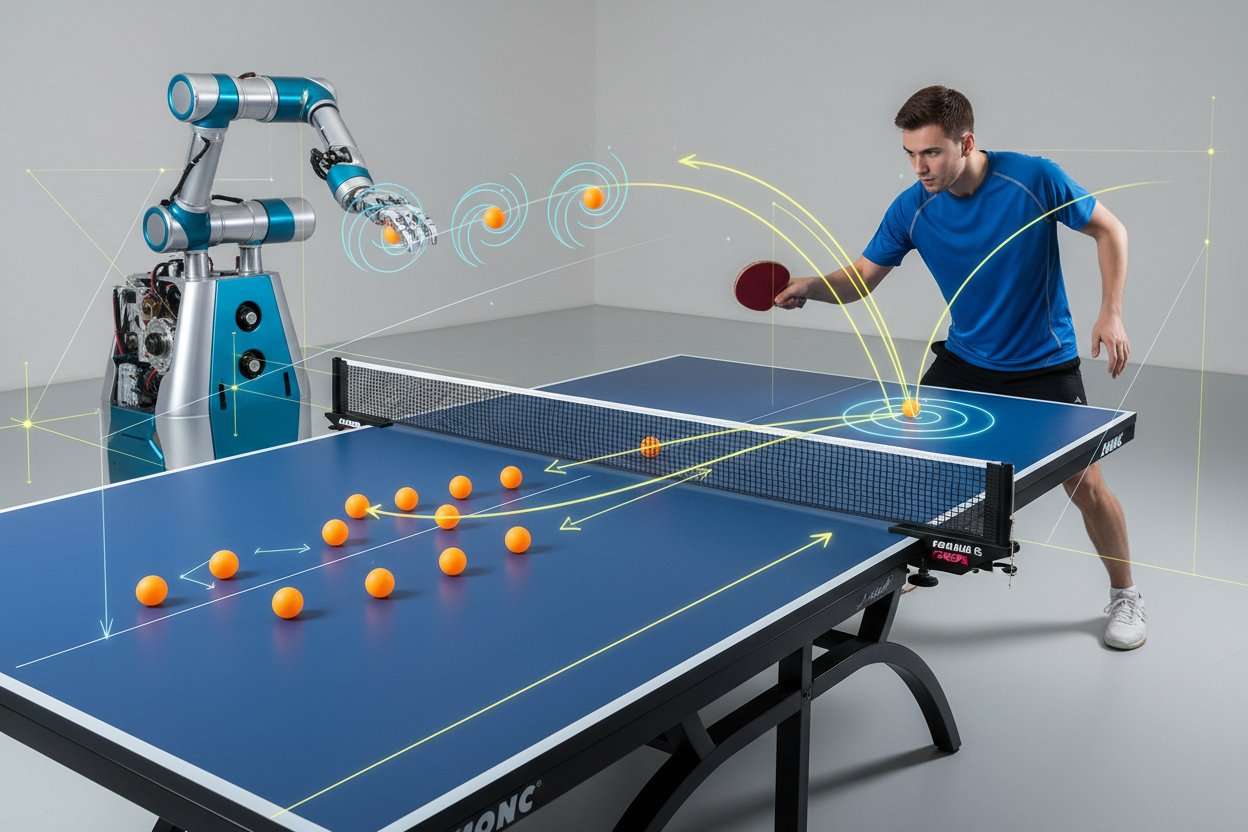
If you’re serious about improving and have some budget flexibility, investing in a table tennis robot can revolutionize your solo practice. Modern robots offer incredible versatility, allowing you to practice everything from basic consistency drills to complex multi-ball sequences.
Start with simple exercises: set the robot to deliver balls to your forehand at a moderate pace with slight topspin. Focus on returning each ball to the same spot on the opposite side of the table. This builds consistency and helps you develop a reliable stroke pattern. Once you’re comfortable, gradually increase the speed or add more spin variation.
One of my favorite robot drills involves setting up a sequence that alternates between forehand and backhand positions. This forces you to move quickly and maintain good positioning while executing different strokes. You can also practice specific game situations, like returning serves or handling heavy topspin loops.
The beauty of robot training is the ability to repeat the exact same shot hundreds of times. This repetition is crucial for developing muscle memory and confidence in your strokes. Plus, you can gradually increase difficulty as you improve, ensuring continuous progression.
Self-Rally Techniques: Mastering Ball Control
Self-rallying – hitting the ball up to yourself repeatedly – might look simple, but it’s an excellent way to develop touch, timing, and paddle control. This technique is perfect for warm-ups or when you only have a small space to practice.
Start by gently hitting the ball straight up about 12-18 inches high, using minimal wrist movement and focusing on the center of your paddle. The goal is consistency – see how many consecutive hits you can achieve. Once you’re comfortable with basic up-and-down rallying, try adding slight forward movement, as if you’re hitting gentle drives.
Advanced self-rallying involves alternating between different strokes and spins. Try hitting a few forehands, then switch to backhands, or alternate between topspin and backspin. You can even practice while walking around or incorporating footwork patterns. This develops incredible ball control and helps you understand how different paddle angles and contact points affect ball behavior.
I often use self-rallying as a meditation-like practice session. There’s something rhythmic and calming about the consistent ball contact, and it’s amazing how much you can learn about your paddle grip and stroke mechanics through this simple exercise.
Shadow Play: Perfecting Your Technique Without the Ball ⚡
Don’t underestimate the power of shadow play – practicing your strokes without a ball. This might feel awkward at first, but it’s incredibly valuable for developing proper form and muscle memory. Professional players regularly incorporate shadow play into their training routines.
Focus on slow, deliberate movements, paying attention to every aspect of your stroke: stance, backswing, contact point, and follow-through. Without the pressure of actually hitting a ball, you can concentrate entirely on technique. Practice in front of a mirror if possible, or even better, record yourself to analyze your form later.
Work on specific stroke combinations that you struggle with during actual play. For example, if you have trouble with backhand-to-forehand transitions, practice the footwork and stroke sequence repeatedly until it feels natural. Shadow play is also perfect for working on serves – you can practice your toss, timing, and contact point without chasing balls around the room.
I particularly recommend shadow play for developing consistency in your ready position and recovery after each stroke. Many players neglect these fundamentals, but they’re crucial for maintaining balance and preparing for the next shot effectively.
Target Practice: Precision and Placement Training 🎪
Accuracy is just as important as power in table tennis, and target practice helps develop pinpoint placement skills. Set up targets on the opposite side of the table using cups, cones, or even pieces of paper taped down. Start with larger targets and gradually make them smaller as your accuracy improves.
Practice hitting specific areas of the table from various positions. For example, stand at the backhand corner and try to hit targets in the opposite forehand corner. This develops cross-court accuracy and helps you understand angles better. You can also practice down-the-line shots or work on hitting the sidelines consistently.
One effective drill involves placing targets at different depths – some near the net, others near the baseline. This helps you develop touch for short balls and power for deeper shots. Try to hit each target in sequence, which improves both accuracy and the ability to vary shot placement during rallies.
Target practice is also excellent for serve training. Set up targets in different service boxes and practice hitting them with various serves. This develops the precision needed for effective serving and helps you understand how different spins and speeds affect ball placement.
Footwork Drills: Building the Foundation of Great Play 👟
Great table tennis isn’t just about arm technique – proper footwork is essential for consistent, powerful shots. Solo footwork drills help develop the agility and positioning skills needed for competitive play.
Start with basic side-to-side movement drills. Set up markers or cones about 3-4 feet apart and practice moving between them using proper table tennis footwork – small, quick steps with your weight on the balls of your feet. Focus on maintaining good posture and keeping your paddle in ready position throughout the movement.
Practice the classic “two-step” footwork pattern used for forehand attacks. Step out with your right foot (for right-handed players), then bring your left foot to a comfortable hitting position. This movement should become automatic, allowing you to get into proper position quickly during actual play.
Don’t forget about forward and backward movement. Practice stepping in for short balls and backing up for lobs or deep shots. These movements are often neglected in solo practice but are crucial for handling the variety of shots you’ll face in matches.
Mental Training: The Often Overlooked Aspect 🧠
Solo practice isn’t just about physical technique – it’s also an excellent opportunity to work on mental aspects of your game. Use your practice time to develop focus, visualization skills, and match-like intensity.
Try playing imaginary matches against yourself or visualized opponents. Create specific scenarios: you’re down 9-10 in the fifth game, or you need to return a crucial serve. This mental practice helps prepare you for pressure situations and develops the ability to maintain focus under stress.
Practice your pre-shot routine during solo sessions. Develop a consistent approach to each shot that you can rely on during matches. This might include taking a deep breath, visualizing the shot placement, or using specific self-talk cues.
Meditation and breathing exercises can also be incorporated into your solo practice. Spend a few minutes before or after your technical training focusing on deep, controlled breathing. This helps develop the calm mindset needed for consistent performance.
Making the Most of Your Solo Sessions
To maximize the effectiveness of your solo practice, structure your sessions like you would any other workout. Start with a warm-up, work on specific techniques, and end with a cool-down period. Keep a practice journal to track your progress and identify areas that need more work.
Set specific goals for each session. Rather than just “hitting balls for an hour,” aim for something like “improve backhand consistency by achieving 50 consecutive wall hits” or “increase serve accuracy by hitting 8 out of 10 targets.” This focused approach leads to faster improvement and keeps your practice sessions engaging.
Don’t forget to vary your practice routine regularly. While repetition is important for developing muscle memory, variety keeps your sessions interesting and helps you develop a more complete skill set. Mix technical drills with fitness work, and always include some fun elements to maintain your enthusiasm for the sport.
Remember that solo practice is a complement to, not a replacement for, playing with others. The skills you develop during solo sessions will make your matches more enjoyable and competitive, but you still need real opponents to develop timing, strategy, and match experience.
Solo table tennis practice might initially feel less exciting than playing matches, but it’s where real improvement happens. These techniques have helped countless players develop their skills and build confidence. The key is consistency – even 20-30 minutes of focused solo practice several times a week can lead to significant improvement over time. So grab your paddle, set up your space, and start building the foundation for better table tennis! Your future opponents won’t know what hit them! 🚀
Planet Table Tennis Digital Guides
🎯🏓 For more help in improving your game check out all my digital guides (including free guides) which cover Matchplay, Tactics, Technique, Drills and more.
Click the Learn More button