

Forehand Topspin Table Tennis Guide: From Basics to Advanced 🏓
If you’ve ever watched professional table tennis players execute those lightning-fast, curved shots that seem to defy physics, you’ve witnessed the power of the forehand topspin. This fundamental stroke isn’t just a flashy move – it’s the backbone of modern table tennis strategy and the key to elevating your game from recreational to competitive level.
Whether you’re picking up a paddle for the first time or you’ve been playing for years, mastering the forehand topspin will transform how you approach every rally. I remember when I first started playing seriously, my coach told me something that stuck: “You can win points with power, but you’ll win matches with spin.” Today, I’ll walk you through everything you need to know about developing this essential shot, from the basic mechanics to advanced variations that’ll have your opponents scrambling.
Understanding the Fundamentals of Forehand Topspin 🎯
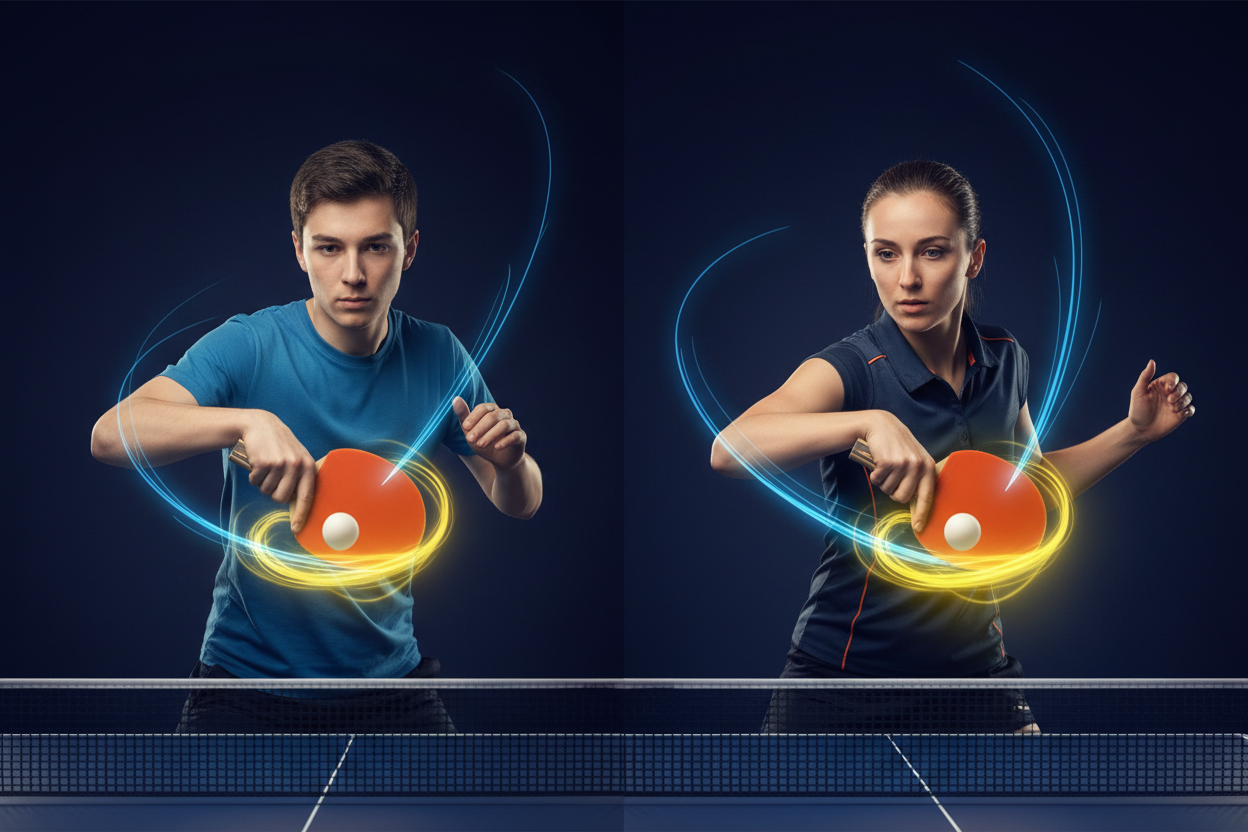
The forehand topspin is essentially a stroke where you brush the ball from low to high, creating forward rotation that causes the ball to dip quickly after clearing the net. This spin not only adds consistency to your shots but also generates pace and makes it incredibly difficult for opponents to return effectively.
What makes topspin so effective is the Magnus effect – the physics principle that causes a spinning ball to curve through the air. When you impart topspin, the ball travels in an arc, allowing you to hit with more power while still keeping the ball on the table. It’s like having a safety net that lets you be aggressive without being reckless.
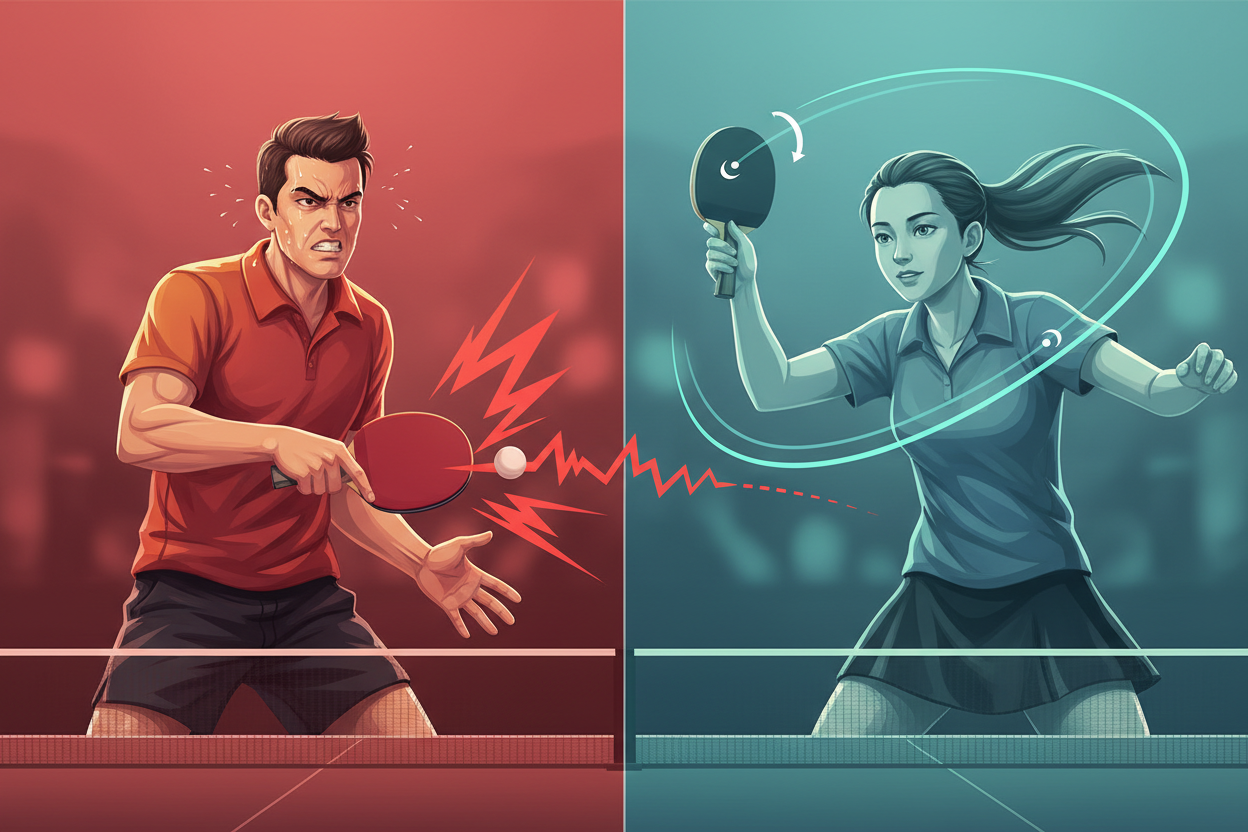
The beauty of the forehand topspin lies in its versatility. You can use it to attack weak serves, counter aggressive shots, or even as a setup shot for more powerful attacks. Once you understand the basic concept, you’ll start seeing opportunities to use it everywhere in your game.
Essential Grip and Stance for Maximum Control 🤝
Before we dive into the stroke mechanics, let’s talk about your foundation. Your grip is your connection to the paddle, and getting it right is crucial for generating proper topspin. The shakehand grip is most commonly used for forehand topspin, where you hold the paddle like you’re shaking someone’s hand.
Your thumb should rest on the backhand side of the paddle, while your index finger extends along the back of the blade. The other three fingers wrap around the handle, providing stability and control. I always tell beginners to imagine they’re holding a small bird – firm enough that it won’t fly away, but gentle enough not to hurt it.
Your stance is equally important. Position yourself with your feet shoulder-width apart, left foot slightly forward if you’re right-handed. Your knees should be slightly bent, and your weight should be on the balls of your feet. This athletic position allows for quick movement and proper weight transfer during the stroke.
Keep your playing arm relaxed but ready, with your elbow positioned away from your body. Your non-playing hand should be up and ready to help with balance and positioning. Think of yourself as a coiled spring, ready to unleash controlled power at any moment.
Step-by-Step Stroke Mechanics Breakdown ⚙️
Now comes the exciting part – the actual stroke. The forehand topspin can be broken down into four distinct phases: preparation, backswing, contact, and follow-through. Each phase is crucial for generating maximum spin and control.
During preparation, turn your body slightly to the right (for right-handed players) and shift your weight to your right foot. Your paddle should be positioned low and back, ready to accelerate upward through the ball. This is your loading phase – you’re storing energy that you’ll release during contact.
The backswing doesn’t need to be huge. In fact, many recreational players make the mistake of taking their paddle too far back, which reduces control and timing. A compact backswing with your paddle at about waist level is perfect for most situations.
Contact is where the magic happens. As you swing forward and upward, your paddle should meet the ball at the peak of its bounce or just slightly after. The key is brushing the ball from about 7 o’clock to 1 o’clock on the ball’s surface. This upward brushing motion is what creates the topspin rotation.
Your follow-through should be smooth and controlled, with your paddle finishing high and across your body. Don’t stop abruptly after contact – let the momentum carry your paddle through the natural arc of the swing. This follow-through is crucial for consistency and helps ensure you’re imparting maximum spin on the ball.
Timing and Footwork: The Foundation of Success 👟
Great footwork separates good players from great ones, and nowhere is this more evident than in forehand topspin execution. You can have perfect technique, but without proper positioning, you’ll struggle to make consistent contact with the ball.
The key to good footwork is reading your opponent’s shot early and moving to the optimal position before the ball reaches your side of the table. This means watching your opponent’s paddle angle, body position, and follow-through to anticipate where the ball is heading.
For forehand topspin, you want to position yourself so the ball is slightly to your right side (for right-handed players) at about waist height when you make contact. This gives you the best angle to brush up on the ball and generate maximum spin.
Practice the shuffle step for lateral movement – keep your feet parallel and slide them along the ground rather than crossing them over. This maintains your balance and keeps you ready to move in any direction. When you need to cover more distance, use crossover steps, but always try to get your feet set before making your stroke.
Timing is intimately connected to footwork. The better your positioning, the easier it becomes to time your stroke correctly. Start your backswing as the ball bounces on your opponent’s side, and begin your forward swing as the ball bounces on your side. This rhythm becomes second nature with practice.
Common Mistakes and How to Fix Them 🚫
Even experienced players fall into certain traps when executing forehand topspin. One of the most common mistakes I see is trying to hit the ball too hard. Remember, topspin is about brushing the ball, not smashing it. When you focus too much on power, you often end up hitting through the ball rather than up and over it, reducing spin and consistency.
Another frequent error is incorrect contact point. Many players let the ball drop too low before making contact, which forces them to lift the ball rather than brush it. The ideal contact point is at the peak of the ball’s bounce or just slightly after, when the ball is still rising or at its highest point.
Poor body rotation is another culprit behind inconsistent topspin. Your power doesn’t come just from your arm – it comes from your entire body working in harmony. Make sure you’re rotating your hips and shoulders through the shot, transferring weight from your back foot to your front foot as you swing.
Tension is the enemy of good technique. When players get nervous or try too hard, they tense up their grip and arm muscles. This reduces feel and makes it impossible to generate the subtle brushing motion needed for quality topspin. Stay relaxed and focus on smooth, fluid motion rather than muscular force.
Advanced Techniques and Variations 🚀
Once you’ve mastered the basic forehand topspin, it’s time to add some advanced variations to your arsenal. The loop drive combines heavy topspin with forward speed, making it an excellent weapon against defensive players. To execute this shot, contact the ball slightly earlier and with more forward motion while maintaining the upward brushing action.
The slow loop is perfect for opening up defensive blocks or short pushes. Use more upward motion and less forward speed, creating a high, arcing ball with heavy spin that’s difficult to attack. This shot gives you time to recover and often forces weak returns that you can attack aggressively.
Against backspin, you’ll need to adjust your technique significantly. Lower your paddle angle and increase the upward motion to overcome the incoming underspin. The key is patience – don’t try to overpower heavy backspin, but rather work to neutralize it and gradually take control of the rally.
The counter-topspin is an advanced technique used against your opponent’s topspin attacks. Since the ball already has forward rotation, you need less upward motion and can focus more on forward speed and placement. This shot requires excellent timing and feel, but it’s devastatingly effective when executed properly.
Practice Drills for Skill Development 💪
Consistent practice with focused drills is the only way to develop reliable forehand topspin. Start with multiball training, where a coach or practice partner feeds you balls in a consistent rhythm. Begin with slow, easy balls and focus on technique rather than power. Gradually increase the speed and spin as your technique improves.
The crosscourt forehand drill is excellent for building consistency. Rally forehand to forehand with your practice partner, focusing on maintaining topspin on every shot. Start with 10 consecutive shots, then gradually work up to 50 or more. This drill builds muscle memory and helps you develop the rhythm needed for match play.
Practice against different types of incoming balls. Have your partner alternate between topspin, backspin, and flat shots so you learn to adjust your technique accordingly. This variation is crucial because in real matches, you’ll rarely face the same type of ball twice in a row.
Don’t forget to practice your footwork separately. Set up cones or markers and practice moving to different positions while shadow-stroking your forehand topspin. This helps integrate proper movement with stroke technique, which is essential for match situations.
Mental Game and Strategy Implementation 🧠
Technical proficiency is only half the battle – knowing when and how to use your forehand topspin strategically is equally important. In matches, look for opportunities to use your topspin to change the pace of rallies. If your opponent is comfortable with fast, flat exchanges, introduce heavy topspin to disrupt their rhythm.
Use your forehand topspin to move your opponent around the table. Aim for the corners and wide angles to create openings for follow-up attacks. A well-placed topspin shot can force a weak return that sets up an easy winner on the next ball.
Develop patterns that incorporate your forehand topspin. For example, serve short to the forehand, loop the return crosscourt, then attack the next ball down the line. Having predetermined patterns helps you think ahead and puts pressure on your opponents.
Stay confident in your technique, especially during pressure situations. Many players abandon their topspin game when they get nervous, reverting to safer but less effective shots. Trust your practice and stick to your strengths when it matters most.
Conclusion: Your Journey to Topspin Mastery 🏆
Mastering the forehand topspin is a journey that never really ends. Even professional players continue to refine and adjust their technique throughout their careers. The key is to be patient with yourself while maintaining consistent, focused practice.
Start with the fundamentals – proper grip, stance, and basic stroke mechanics. Build your foundation slowly and deliberately, focusing on quality over quantity in your practice sessions. As your technique becomes more natural, gradually add power and variation to your shots.
Remember that everyone’s learning curve is different. Some players pick up topspin quickly, while others need months of dedicated practice to feel comfortable. Don’t get discouraged if progress seems slow – every hour you spend practicing is an investment in your long-term improvement.
The forehand topspin isn’t just a shot – it’s a gateway to advanced table tennis strategy and tactics. Once you can execute it consistently, you’ll find that other aspects of your game improve as well. Your confidence will grow, your understanding of spin will deepen, and you’ll start seeing the table in a completely different way.
So grab your paddle, find a practice partner, and start working on your forehand topspin today. With dedication and proper technique, you’ll soon be creating those beautiful, spinning shots that make table tennis such an exciting and dynamic sport. The journey might be challenging, but the rewards – both in terms of improved play and pure enjoyment – are absolutely worth it! 🌟
Planet Table Tennis Digital Guides
🎯🏓 For more help in improving your game check out all my digital guides (including free guides) which cover Matchplay, Tactics, Technique, Drills and more.
Click the Learn More button