

How to Deal with Heavy Spin in Table Tennis: A Practical Guide
Picture this: you’re locked in an intense rally when your opponent unleashes a wicked topspin shot that curves impossibly through the air. Your return flies off the table like a rocket, leaving you scratching your head in frustration. Sound familiar? 🏓
Heavy spin is arguably the most challenging aspect of table tennis for players at every level. Whether you’re facing a devastating loop drive or trying to decode a tricky underspin serve, understanding how to read and counter spin can make the difference between victory and defeat. The good news? With the right techniques and mindset, you can transform these spinning nightmares into opportunities to win points.

In this comprehensive guide, we’ll break down everything you need to know about dealing with heavy spin in table tennis. From understanding the physics behind spin to developing practical counter-strategies, you’ll discover how to turn your opponent’s weapon into your advantage.
Understanding the Science Behind Table Tennis Spin 🔬
Before diving into techniques, it’s crucial to understand what’s actually happening when a ball has heavy spin. Think of spin as the ball’s rotation around its axis as it travels through the air. This rotation affects both the ball’s flight path and how it behaves when it bounces on your side of the table.
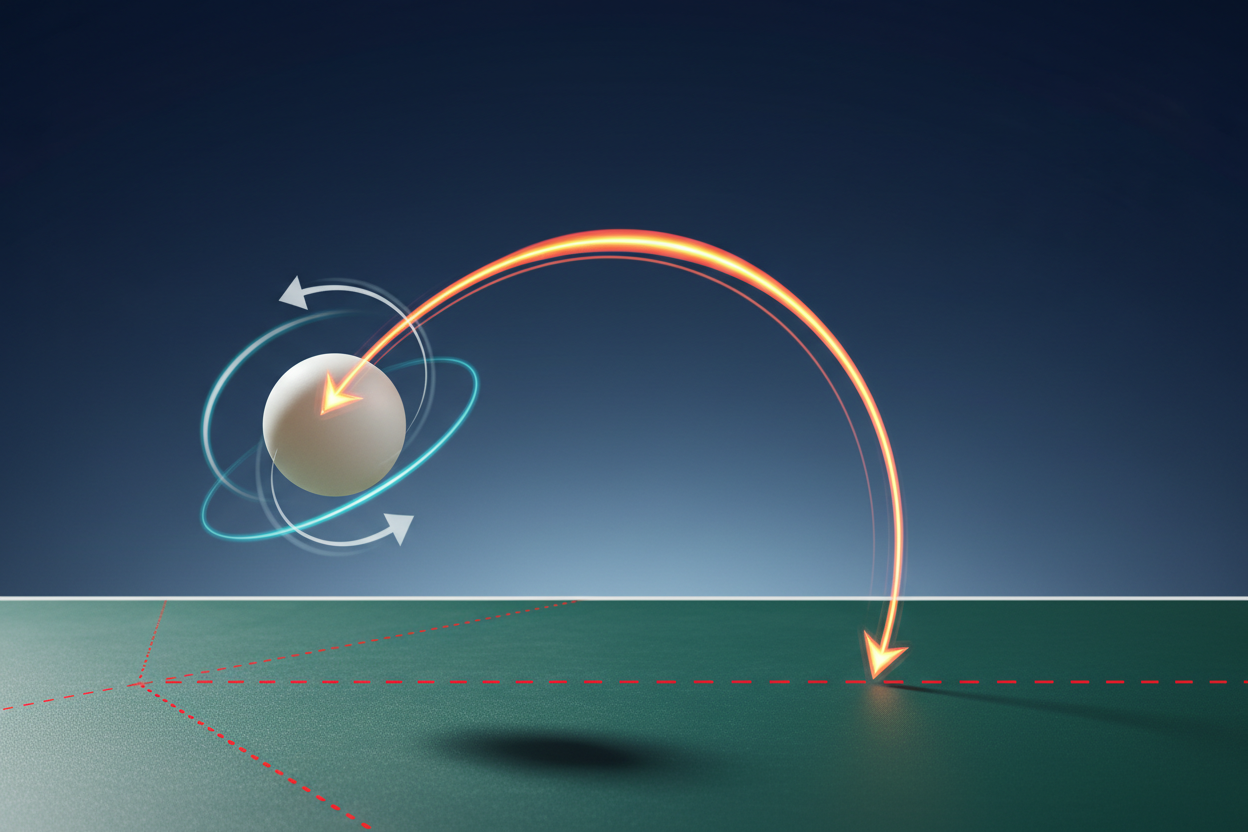
Topspin causes the ball to dip downward during flight and kick forward aggressively after bouncing. The faster the rotation, the more pronounced these effects become. Conversely, backspin (or underspin) makes the ball float longer in the air and “bite” backward upon contact with your paddle or the table surface.
Sidespin adds another layer of complexity, causing the ball to curve left or right during flight and bounce at unexpected angles. Many advanced players combine multiple types of spin, creating shots that seem to defy physics to the untrained eye.
Reading Spin: Your First Line of Defense 👁️
The ability to quickly identify spin type and intensity is fundamental to playing effective table tennis. Most recreational players struggle because they’re trying to react to the ball after it bounces, which is far too late.
Watch your opponent’s paddle angle and contact point religiously. A closed paddle angle (tilted forward) typically produces topspin, while an open angle (tilted backward) generates backspin. The steeper the angle, the heavier the spin is likely to be.
Pay attention to the sound of contact as well. Heavy topspin often produces a sharp “crack” sound, while underspin creates a more muffled “thud.” These audio cues become incredibly valuable during fast exchanges when visual tracking becomes difficult.
The ball’s trajectory also tells a story. Topspin shots tend to arc downward more quickly, while underspin shots float with a straighter path. Sidespin will cause visible curve during flight, though this can be subtle with moderate spin levels.
Mastering Your Paddle Angle: The Key to Spin Control ⚡
Your paddle angle is your primary tool for neutralizing spin. This concept might seem simple, but mastering it requires considerable practice and muscle memory development.
Against heavy topspin, you need to close your paddle angle significantly more than you might expect. The ball wants to kick forward and upward off your paddle, so you must compensate by angling the paddle face downward. Start with a very closed angle and gradually adjust based on the spin intensity.
For underspin, open your paddle angle to lift the ball over the net. The heavier the backspin, the more you’ll need to open your paddle face. Many players make the mistake of not opening enough, resulting in balls that hit the net or fall short.
Sidespin requires lateral adjustments to your paddle angle. If the ball is spinning to your right (from your perspective), angle your paddle slightly to the left to compensate, and vice versa. This takes considerable practice to master, as the adjustments are often quite subtle.
Footwork and Positioning Against Spin 🦶
Proper positioning is often overlooked when discussing spin, but it’s absolutely critical for consistent returns. Heavy spin affects not just how you hit the ball, but where you need to be when you hit it.
Against topspin, position yourself slightly further from the table than usual. The ball will kick forward after bouncing, and you need space to let it come to you rather than rushing the shot. This extra distance also gives you more time to read the spin and adjust your technique.
For underspin shots, move closer to the table and be prepared to attack the ball earlier in its trajectory. Underspin loses energy quickly, so waiting too long will leave you with a dead ball that’s difficult to attack effectively.
Lateral movement becomes crucial when dealing with sidespin. Don’t just adjust your paddle angle – move your feet to get your body in the optimal position relative to the ball’s curved path. This might mean taking an extra step to your left or right to ensure clean contact.
Timing Adjustments for Different Spin Types ⏰
Timing is everything in table tennis, and spin dramatically affects when you should make contact with the ball. Each type of spin requires different timing considerations to maximize your chances of success.
Heavy topspin shots should generally be taken earlier in their bounce trajectory, ideally at the peak or just after. Waiting too long allows the forward rotation to take full effect, making the ball much more difficult to control. This early timing also prevents the ball from kicking too aggressively off your paddle.
Underspin presents the opposite challenge – these balls often need to be taken later in their trajectory to give you the best angle for lifting them over the net. However, don’t wait so long that the ball dies completely, as this makes aggressive returns nearly impossible.
Mixed spins require you to identify the dominant rotation and time accordingly, while also making the necessary paddle angle adjustments for the secondary spin components. This is where experience really pays dividends, as these split-second decisions become more intuitive over time.
Effective Return Strategies and Techniques 🎯
Having solid return strategies for different spin scenarios gives you confidence and helps you stay offensive even when under pressure. The key is having multiple options depending on the situation and your comfort level.
Against heavy topspin, consider blocking with a firm, controlled stroke rather than trying to counter-attack immediately. A well-executed block can neutralize the spin while keeping you in the rally. As you become more comfortable, you can start to counter-loop or even attack these shots directly.
For underspin, lifting the ball with topspin of your own is usually the most effective approach. Start with gentle topspin drives to get comfortable with the motion, then gradually increase your aggression as your technique improves. Push shots can also be effective, especially when executed with good placement and varying spin.
Sidespin shots often respond well to straight blocking or controlled drives down the line. The key is maintaining a stable paddle angle and not getting pulled into the spin’s natural direction. Sometimes the best strategy is simply to return the ball safely and wait for a better opportunity.
Practice Drills to Improve Your Spin Game 💪
Theoretical knowledge only gets you so far – you need targeted practice to develop the muscle memory and instincts necessary for dealing with heavy spin consistently.
Start with basic spin recognition drills. Have a practice partner alternate between different spin types while you focus solely on identifying the spin before attempting your return. This builds the visual recognition skills that are fundamental to everything else.
Progress to paddle angle adjustment drills. Practice returning the same type of heavy spin repeatedly, focusing on finding the correct paddle angle through trial and error. Don’t worry about power or placement initially – just focus on getting the ball back on the table consistently.
Multi-ball training is incredibly effective for spin practice. Having someone feed you various spin types in rapid succession forces you to make quick adjustments and builds the reaction speed you’ll need in actual matches. Start slowly and gradually increase the pace as your comfort level improves.
Mental Approach: Staying Calm Under Spin Pressure 🧠
The psychological aspect of dealing with heavy spin is often underestimated. Many players become frustrated or anxious when facing unfamiliar spin, leading to rushed shots and poor decision-making.
Develop a pre-return routine that helps you stay focused and calm. This might include taking a deep breath, checking your grip, or simply reminding yourself to watch the ball carefully. Having a consistent routine helps maintain composure during high-pressure moments.
Accept that you won’t read every spin perfectly, especially when you’re still learning. Instead of getting frustrated by mistakes, use them as learning opportunities. Pay attention to what went wrong and make a mental note for next time.
Remember that your opponent is also dealing with the pressure of executing these spin shots consistently. Heavy spin shots require significant skill and energy to produce, so staying patient and making them work for their points can be an effective strategy in itself.
Conclusion: Turning Spin from Foe to Friend 🌟
Dealing with heavy spin in table tennis is undoubtedly challenging, but it’s also one of the most rewarding skills to master. The journey from being intimidated by spinning shots to confidently handling them (and even using them to your advantage) is what separates good players from great ones.
Remember that improvement takes time and patience. Focus on understanding the fundamentals – reading spin, adjusting paddle angles, and positioning yourself correctly. Build these skills gradually through focused practice, and don’t be discouraged by initial struggles.
Most importantly, embrace the challenge that spin presents. Instead of viewing it as an obstacle, see it as an opportunity to elevate your game and develop a more complete skill set. With dedication and the right approach, you’ll soon find yourself not just surviving against heavy spin, but thriving against it.
The next time you face an opponent with wicked spin, take a deep breath, trust your preparation, and remember – every spinning ball is just another puzzle waiting to be solved. Happy playing! 🏓✨
Planet Table Tennis Digital Guides
🎯🏓 For more help in improving your game check out all my digital guides (including free guides) which cover Matchplay, Tactics, Technique, Drills and more.
Click the Learn More button