Master the Art of Returning Serves in Table Tennis: Your Complete Guide to Dominating the Return Game 🏓
Picture this: you’re standing at the table, paddle in hand, watching your opponent prepare to serve. That split second when the ball leaves their racket determines whether you’ll be on the offensive or scrambling to stay in the rally. The return of serve isn’t just another shot in table tennis – it’s your golden opportunity to seize control of the point before your opponent can dictate the pace.
Many players spend countless hours perfecting their serves but neglect the equally crucial skill of returning them effectively. Here’s the truth: mastering serve returns can transform your entire game, turning you from a reactive player into a proactive point-winner. Whether you’re facing a tricky backspin serve or a lightning-fast topspin delivery, the right return technique can shift momentum in your favor instantly.
Understanding the Foundation: Reading Your Opponent’s Serve 👁️
Before you can master returning serves, you need to become a serve detective. Every serve tells a story through the server’s body language, paddle angle, and contact point. The key lies in developing your ability to read these subtle cues within milliseconds.
Start by focusing on your opponent’s paddle angle at contact. A closed paddle face typically indicates topspin, while an open face suggests backspin or sidespin. The direction of their paddle’s follow-through reveals the ball’s intended path and spin direction. Don’t just watch the ball – observe the entire serving motion from start to finish.
Professional players often emphasize the importance of watching the server’s elbow and shoulder movement. These larger muscle groups provide earlier visual cues than the wrist or paddle alone. When you train your eyes to catch these preliminary movements, you’ll gain precious milliseconds to prepare your return.
The Ready Position: Setting Yourself Up for Success 🎯
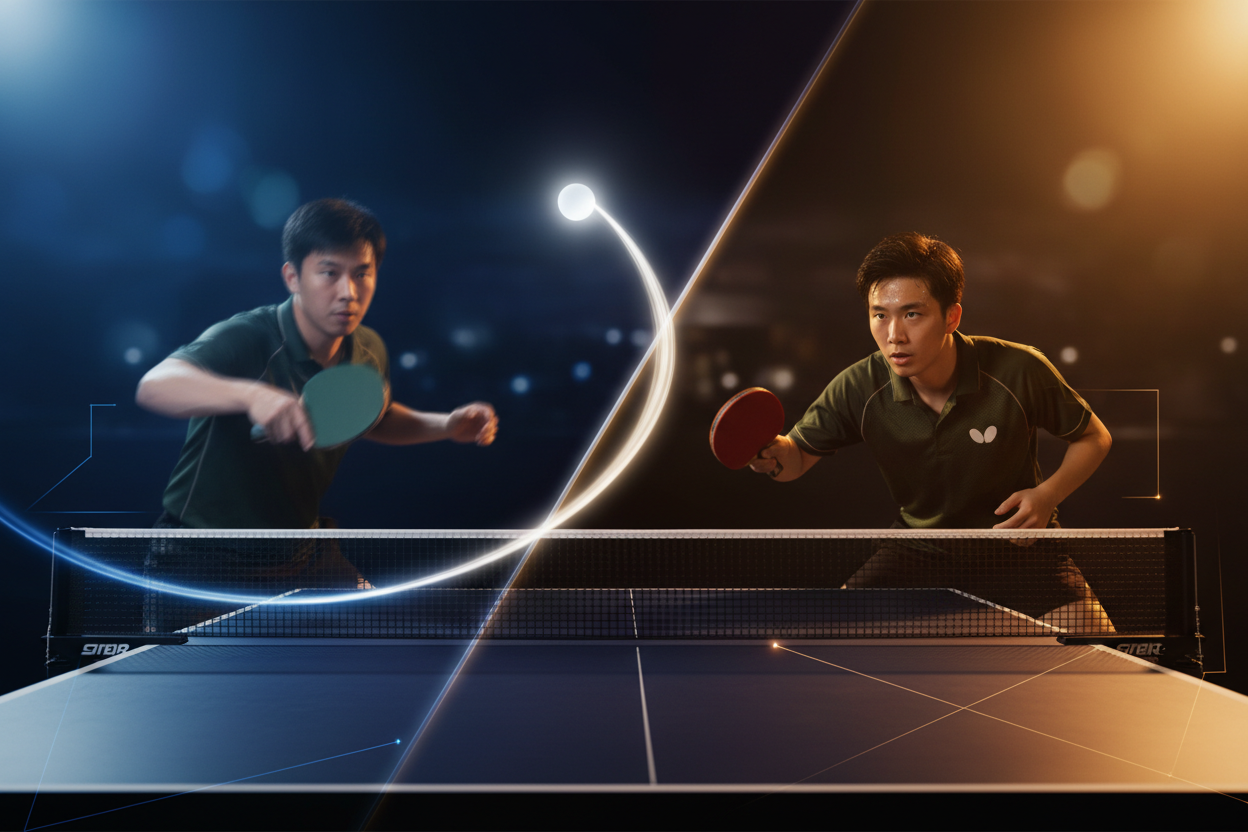
Your ready position is the foundation upon which all successful returns are built. Stand approximately one arm’s length from the table, with your feet shoulder-width apart and weight slightly forward on the balls of your feet. This athletic stance allows for quick movement in any direction.
Keep your paddle at a neutral angle, roughly parallel to the table surface. Your playing arm should be relaxed but ready, with your elbow positioned comfortably away from your body. Many recreational players make the mistake of tensing up before the serve, which actually slows their reaction time.
Mental preparation is equally important as physical positioning. Clear your mind of distractions and focus entirely on your opponent’s serving motion. Develop a pre-return routine that helps you achieve this focused state consistently – perhaps a deep breath or a specific visual cue that triggers your concentration.
Conquering Backspin Serves: The Push Return Technique 🔄
Backspin serves are among the most common in recreational play, and they can be deceptively challenging if you don’t understand the physics involved. The ball appears to “die” when it hits your paddle, often resulting in returns that hit the net or fall short of the table.
To counter backspin effectively, you need to open your paddle face and brush upward through the ball. Think of it as giving the ball a gentle lift rather than hitting through it aggressively. The steeper the backspin, the more you’ll need to open your paddle and emphasize the upward motion.
Practice the push return by starting with your paddle below the ball’s anticipated contact point. As you make contact, brush upward and slightly forward, allowing the ball’s own spin to work with your motion rather than against it. Your wrist should remain firm but flexible, providing control without sacrificing feel.
Attacking Topspin Serves: Turning Defense into Offense ⚡
Topspin serves present a different challenge entirely. The ball wants to jump off your paddle and sail long if you don’t adjust your technique accordingly. However, these serves also offer excellent opportunities for aggressive returns when handled correctly.
Close your paddle face slightly and focus on meeting the ball at its peak height or just after. This timing allows you to use the serve’s energy while maintaining control. Instead of fighting the topspin, work with it by directing the ball’s natural forward rotation into your chosen target area.
For aggressive topspin returns, consider the loop return technique. This involves brushing over the ball with a closed paddle face, adding your own topspin to the equation. The result is a powerful, dipping return that can immediately put your opponent on the defensive. Practice this technique gradually, starting with moderate pace before building up to full power.
Mastering Sidespin: The Art of Angle Adjustment 🌪️
Sidespin serves can be the most disorienting for developing players because the ball’s trajectory seems to defy logic. Right sidespin makes the ball curve to your left after bouncing, while left sidespin does the opposite. Understanding this concept is crucial for consistent returns.
The secret to returning sidespin lies in paddle angle adjustment and footwork. If you’re facing right sidespin (curving to your left), angle your paddle slightly to compensate for the ball’s natural curve. Think of your paddle as a mirror, reflecting the ball back along its intended path rather than where it appears to be going.
Footwork becomes especially important with sidespin serves. Don’t just adjust your paddle – move your entire body to get into the optimal position. Sometimes this means taking a small step to the side or adjusting your stance to accommodate the ball’s curved trajectory.
Advanced Return Strategies: Taking Your Game to the Next Level 🚀
Once you’ve mastered the basic return techniques, it’s time to develop strategic thinking around your returns. The best players don’t just return serves successfully – they use their returns to gain tactical advantages and set up winning opportunities.
Consider the concept of placement over power. A well-placed return to your opponent’s weaker side often proves more effective than a powerful return to their strength. Study your opponents during warm-up and early points to identify their preferred receiving positions and comfort zones.
Vary your return length and pace to keep opponents guessing. Mix short returns that barely clear the net with deeper returns that push your opponent back from the table. This variation prevents your opponent from settling into a rhythm and forces them to constantly adjust their positioning.
Common Mistakes and How to Avoid Them ❌
Even experienced players fall into predictable patterns when returning serves. One of the most common mistakes is returning every serve to the same location – usually the opponent’s backhand side. While this might work against weaker players, stronger opponents will quickly exploit this predictability.
Another frequent error is over-thinking the return. While reading the serve is important, paralysis by analysis can be equally detrimental. Trust your instincts and commit to your chosen return technique. A decisive, imperfect return often succeeds better than a hesitant, technically sound one.
Many players also neglect their follow-through on returns, focusing only on making contact with the ball. A proper follow-through ensures consistent direction and spin, while also preparing you for the next shot in the rally. Think of each return as the beginning of your offensive sequence, not just a defensive reaction.
Practice Drills for Return Mastery 🎾
Developing consistent return skills requires focused practice with specific drills designed to challenge different aspects of your technique. Start with basic serve-and-return exercises where your practice partner serves various spins to predetermined locations. This allows you to focus on technique without worrying about ball placement.
Progress to random serve practice, where your partner varies both spin and placement unpredictably. This more closely mimics match conditions and helps develop your reading skills alongside your technical abilities. Keep score during these drills to add competitive pressure and simulate real match situations.
Solo practice can also be valuable for return development. Use a robot or ball machine if available, or practice your return motions without a ball to ingrain proper muscle memory. Visualization exercises, where you imagine facing different types of serves and mentally rehearse your responses, can also improve your reaction time and decision-making.
Conclusion: Your Journey to Return Excellence 🏆
Mastering the art of returning serves in table tennis is a journey that requires patience, practice, and strategic thinking. Remember that every professional player once struggled with the same challenges you’re facing now. The difference lies in their commitment to continuous improvement and their willingness to adapt their technique based on different serving styles.
Start by focusing on one type of serve return at a time, building confidence and consistency before moving on to more complex variations. Pay attention to your opponent’s serving patterns during matches, and don’t be afraid to experiment with different return strategies. The most important aspect is developing the ability to read serves quickly and react decisively.
Your return game will ultimately become one of your greatest weapons on the table tennis court. When you can consistently neutralize your opponent’s best serves and turn them into attacking opportunities, you’ll find yourself winning more points and enjoying the game at a completely new level. Keep practicing, stay patient with your progress, and remember that every great return starts with proper preparation and a confident mindset. The table is waiting – now go out there and show those serves who’s boss! 🌟
Planet Table Tennis Digital Guides
🎯🏓 For more help in improving your game check out all my digital guides (including free guides) which cover Matchplay, Tactics, Technique, Drills and more.
Click the Learn More button