
Mastering the Table Tennis Backhand: Technique and Common Mistakes 🏓
If you’ve ever watched professional table tennis players effortlessly execute lightning-fast backhand shots, you might wonder how they make it look so easy. The truth is, the backhand is often considered the backbone of modern table tennis, yet it’s also one of the most challenging strokes for beginners and intermediate players to master. Whether you’re just picking up a paddle or you’ve been playing for years, perfecting your backhand technique can dramatically transform your game and give you the competitive edge you’ve been seeking.
In this comprehensive guide, we’ll break down everything you need to know about the table tennis backhand – from fundamental techniques to advanced tips, plus the most common mistakes that could be holding you back. By the end of this post, you’ll have a clear roadmap to develop a backhand that’s both powerful and precise. 💪
Understanding the Fundamentals of Table Tennis Backhand
Before diving into specific techniques, it’s crucial to understand what makes a backhand stroke different from other shots in table tennis. The backhand is executed on the non-dominant side of your body (left side for right-handed players), and it requires a completely different set of movements compared to forehand shots.
The beauty of a well-executed backhand lies in its efficiency and speed. Since the stroke involves less body rotation than a forehand, you can often return balls faster and with better control. This makes it an invaluable weapon, especially in fast-paced rallies where split-second reactions determine the winner.
There are several types of backhand shots you should familiarize yourself with: the backhand drive, backhand push, backhand loop, and backhand flick. Each serves a different purpose and requires slight variations in technique, but they all share common fundamental principles that we’ll explore in detail.
Proper Stance and Grip for Backhand Success
Your journey to backhand mastery begins with getting your stance and grip right. I can’t stress enough how these fundamentals form the foundation of every great backhand shot. 🎯
For your stance, position yourself with feet shoulder-width apart, with your left foot slightly forward if you’re right-handed (reverse for left-handed players). Your knees should be slightly bent, and your weight should be evenly distributed on the balls of your feet. This athletic position allows for quick movement and optimal balance during stroke execution.
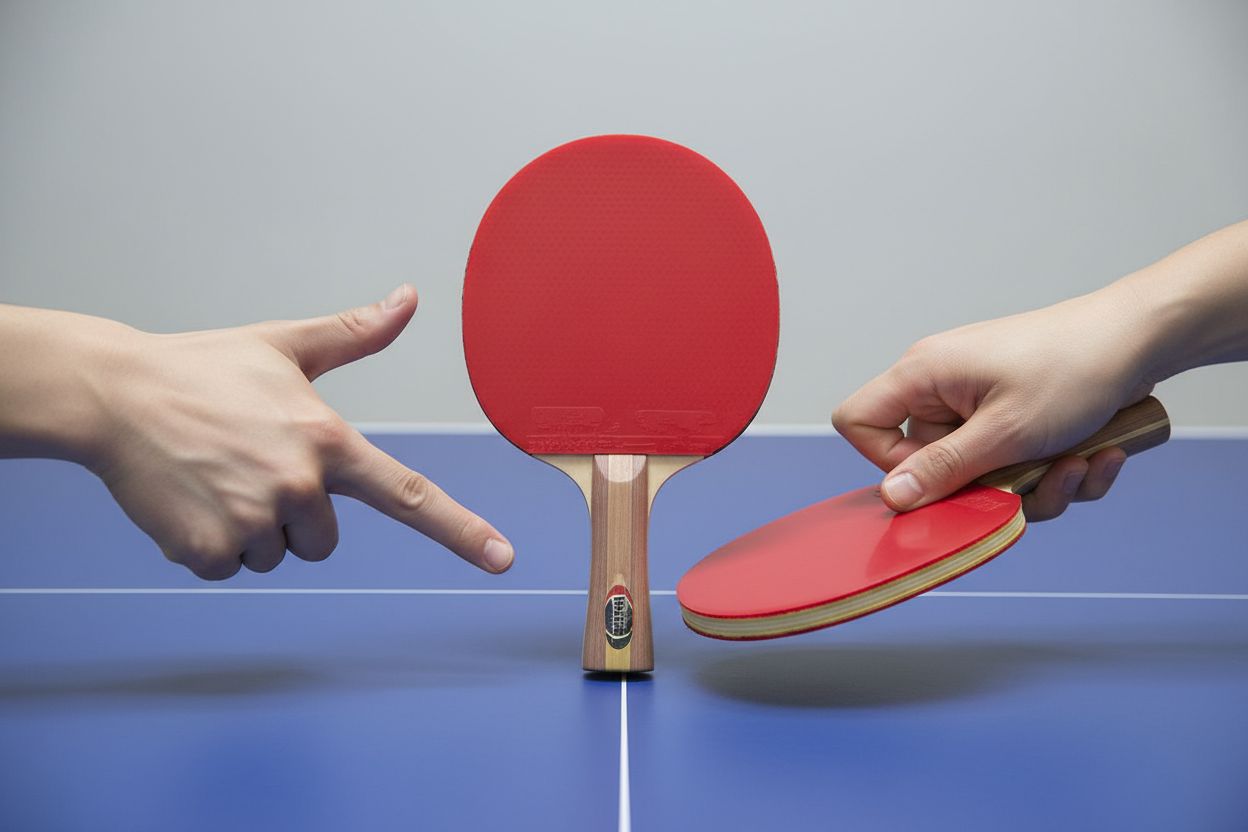
The grip is equally important and can make or break your backhand technique. Most professional players use either the shakehand grip or the penhold grip. For beginners, the shakehand grip is generally recommended as it provides better versatility for both forehand and backhand shots. Hold the paddle as if you’re shaking hands with it, with your thumb resting on one side of the rubber and your index finger on the other side.
Your grip pressure should be firm but not tense – think of holding a small bird that you don’t want to escape but also don’t want to harm. This allows for better feel and control while maintaining the flexibility needed for quick adjustments during play.
Step-by-Step Backhand Technique Breakdown
Now let’s dive into the meat of backhand execution. I’ll walk you through each phase of the stroke, from preparation to follow-through, so you can visualize and practice each component separately before putting it all together.
The preparation phase starts as soon as you recognize the ball is coming to your backhand side. Turn your body slightly to the left (for right-handed players), bringing your paddle back with your elbow close to your body. Your paddle should be at about chest height, with the face slightly closed (angled downward). This compact preparation is what gives the backhand its speed advantage over the forehand.
During the contact phase, step forward with your right foot while rotating your forearm and wrist through the ball. The contact point should be in front of your body, roughly at the height of your elbow. This is where timing becomes crucial – too early or too late, and you’ll lose power and accuracy.
The follow-through is often overlooked but equally important. After contact, continue the motion upward and slightly forward, finishing with your paddle pointing toward your target. Your elbow should end up higher than where it started, and your body weight should have transferred to your front foot. This complete follow-through ensures maximum power transfer and spin generation.
Advanced Backhand Variations and When to Use Them
Once you’ve mastered the basic backhand drive, it’s time to expand your arsenal with different variations. Each type of backhand shot serves a specific tactical purpose, and knowing when to use them can elevate your game significantly. 🚀
The backhand loop is your go-to shot for generating heavy topspin against defensive shots or medium-paced balls. This shot requires a more pronounced upward motion and a slightly more open paddle angle at contact. It’s particularly effective against backspin shots, as the topspin helps the ball clear the net and dip onto the opponent’s side of the table.
For quick exchanges at the table, the backhand flick (or flip) is invaluable. This shot is typically used against short balls that land close to the net on your backhand side. The technique involves a quick wrist snap with minimal backswing, allowing you to attack balls that would otherwise force you into a defensive position.
The backhand push is your defensive weapon, used primarily against short, spinning balls. Unlike the attacking shots, the push requires a downward motion with an open paddle face, designed to return the ball low and with backspin. While it’s a defensive shot, a well-placed push can set up your next attacking opportunity.
Common Backhand Mistakes That Kill Your Game
Even experienced players fall into certain traps that limit their backhand effectiveness. Let me share the most common mistakes I’ve observed over the years, along with practical solutions to fix them.
The biggest mistake I see is players using too much arm movement and not enough wrist and forearm rotation. This results in slower, less accurate shots with poor spin generation. Remember, the backhand is primarily a forearm and wrist stroke – your upper arm should remain relatively stable throughout the motion.
Another frequent error is hitting the ball too late or too early. Late contact often happens when players don’t prepare quickly enough, resulting in the ball being too close to the body at contact. Early contact usually occurs when players rush their shots, leading to poor ball placement and reduced power. The solution is consistent practice with a focus on timing and proper positioning.
Many players also struggle with inconsistent contact points. Your contact point should be consistent for each type of shot – this creates muscle memory and improves accuracy. Practice hitting balls at the same height and distance from your body until it becomes second nature.
Tension is another game-killer that affects many players’ backhands. When you’re tense, your movements become rigid and predictable. Focus on staying relaxed, especially in your grip and shoulder muscles, while maintaining enough firmness to control the paddle effectively. 😌
Drills and Practice Routines for Backhand Improvement
Theory without practice is like having a sports car without fuel – it won’t get you anywhere. Here are some proven drills that will accelerate your backhand development and help you avoid the plateau that many players experience.
Start with the basic repetition drill: have a partner or coach feed balls consistently to your backhand side while you focus on proper technique. Begin with slow, controlled shots and gradually increase the pace as your technique solidifies. Aim for at least 100 consecutive shots with good form before moving to the next level.
The crosscourt backhand drill is excellent for developing consistency and angle control. Rally backhand to backhand with a partner, focusing on keeping the ball crosscourt. This drill improves your ability to maintain long rallies while working on placement and consistency.
For more advanced players, try the backhand attack drill: have someone feed you various types of balls (topspin, backspin, side-spin) to your backhand side, and practice responding with the appropriate attacking shot. This drill develops your ability to read spin and adjust your technique accordingly.
Don’t forget about footwork drills! Set up cones or markers and practice moving to different positions while maintaining proper backhand form. Good footwork is essential for consistent backhand execution, especially when you’re pulled wide or need to cover the table quickly.
Mental Aspects and Match Strategy
Technical proficiency is only part of the equation – the mental game plays a huge role in backhand success during actual matches. Developing confidence in your backhand takes time and requires a strategic approach to practice and competition.
One key mental aspect is learning to trust your backhand under pressure. Many players default to their forehand even when a backhand would be more appropriate, simply because they lack confidence in the stroke. Start using your backhand more frequently in practice matches, even if it means losing some points initially. This investment will pay dividends in the long run.
Strategically, a strong backhand opens up numerous tactical possibilities. You can use it to control the pace of rallies, create angles that put your opponent in difficult positions, and transition from defense to attack more quickly than with forehand shots. Understanding these tactical applications will help you see the backhand not just as a stroke, but as a strategic weapon. ⚔️
Equipment Considerations for Better Backhand Performance
While technique is paramount, the right equipment can certainly enhance your backhand performance. The rubber on your backhand side doesn’t necessarily need to be the same as your forehand side – many players use different rubbers optimized for their playing style.
For backhand play, consider rubbers that offer good control and consistent bounce. Some players prefer slightly softer rubbers on their backhand side as they provide better feel for touch shots and pushes. However, if you’re an aggressive player who frequently attacks with your backhand, a faster rubber might be more suitable.
The blade characteristics also matter. A blade with good vibration dampening can help with backhand control, while still providing enough speed for attacking shots. Don’t get caught up in equipment changes too frequently though – consistency in your setup allows you to develop better feel and timing.
Remember, expensive equipment won’t fix technical flaws, but the right setup can certainly complement good technique and help you perform at your best level. 🏆
Conclusion: Your Path to Backhand Mastery
Mastering the table tennis backhand is a journey that requires patience, dedication, and consistent practice. The techniques we’ve covered – from basic stance and grip to advanced variations and strategic applications – provide you with a comprehensive roadmap for improvement.
Remember that everyone progresses at their own pace, and what works for one player might need adjustment for another. The key is to focus on the fundamentals first, gradually building complexity as your muscle memory and confidence develop. Don’t rush the process – solid technique built slowly will serve you much better than quick fixes that fall apart under pressure.
Start implementing these techniques in your next practice session, focusing on one aspect at a time rather than trying to change everything at once. With consistent effort and the right approach, you’ll soon find that your backhand becomes not just a defensive necessity, but an offensive weapon that can dominate matches and take your game to new heights. Keep practicing, stay patient, and most importantly, enjoy the journey of continuous improvement! 🌟
Planet Table Tennis Digital Guides
🎯🏓 For more help in improving your game check out all my digital guides (including free guides) which cover Matchplay, Tactics, Technique, Drills and more.
Click the Learn More button