

Complete Guide to Table Tennis Spin Techniques and Applications 🏓
Have you ever watched professional table tennis players and wondered how they make the ball dance through the air with such mesmerizing curves and unpredictable bounces? The secret lies in mastering spin techniques – the heart and soul of modern table tennis. Whether you’re a weekend warrior looking to dominate your local club or an aspiring competitor aiming for tournament success, understanding and applying spin will revolutionize your game.
Spin isn’t just about looking fancy on the table; it’s a tactical weapon that can turn defense into offense, create impossible angles, and leave your opponents scratching their heads. In this comprehensive guide, we’ll dive deep into the world of table tennis spin, exploring everything from basic physics to advanced applications that will elevate your play to new heights.
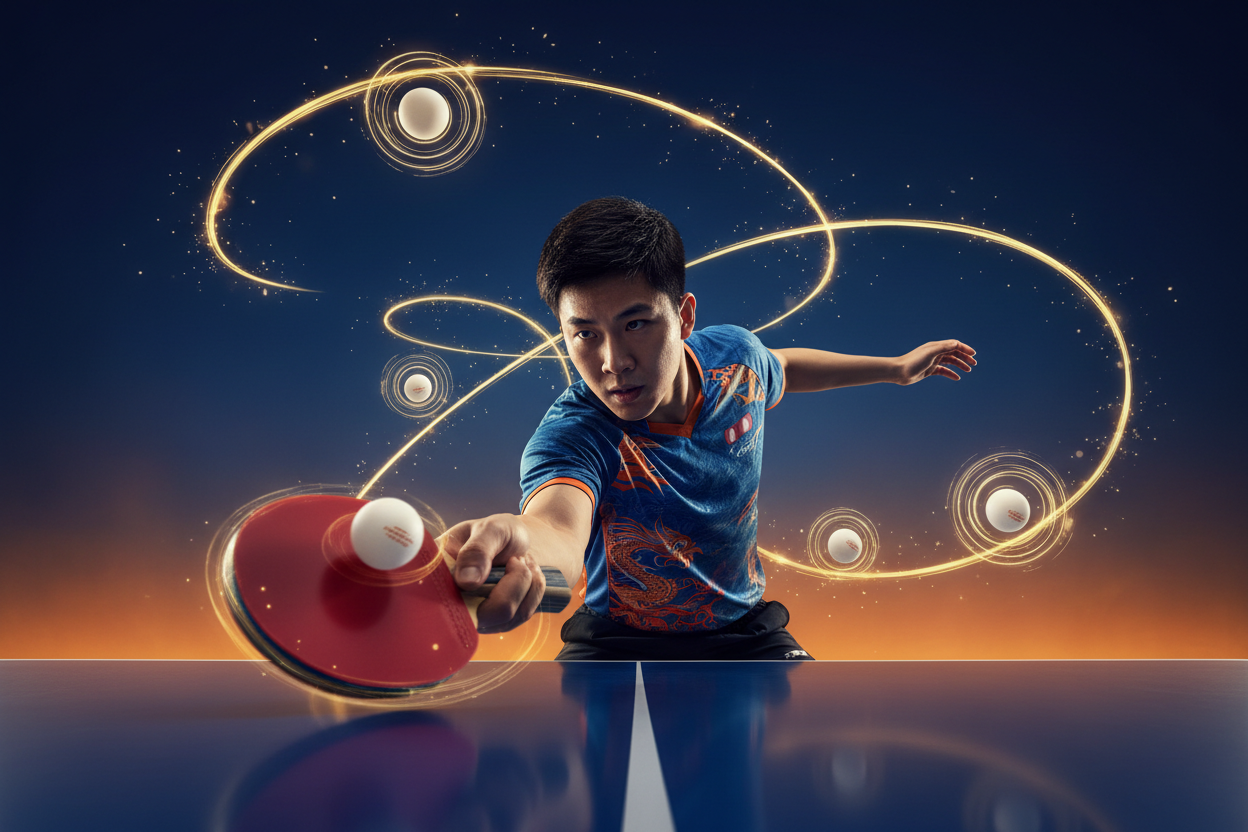
Understanding the Physics Behind Table Tennis Spin ⚡
Before we jump into specific techniques, let’s understand what actually happens when you impart spin on a ping pong ball. When you brush the ball with your paddle at different angles, you create rotation that affects the ball’s flight path and bounce characteristics. This isn’t just theory – it’s the foundation that separates casual players from serious competitors.
The rubber surface of your paddle grips the ball momentarily during contact, and the direction of your stroke determines the axis of rotation. Think of it like throwing a curveball in baseball, but with much more precision and variety. The Magnus effect comes into play here, causing the spinning ball to curve in the air and behave unpredictably when it hits the table or your opponent’s paddle.
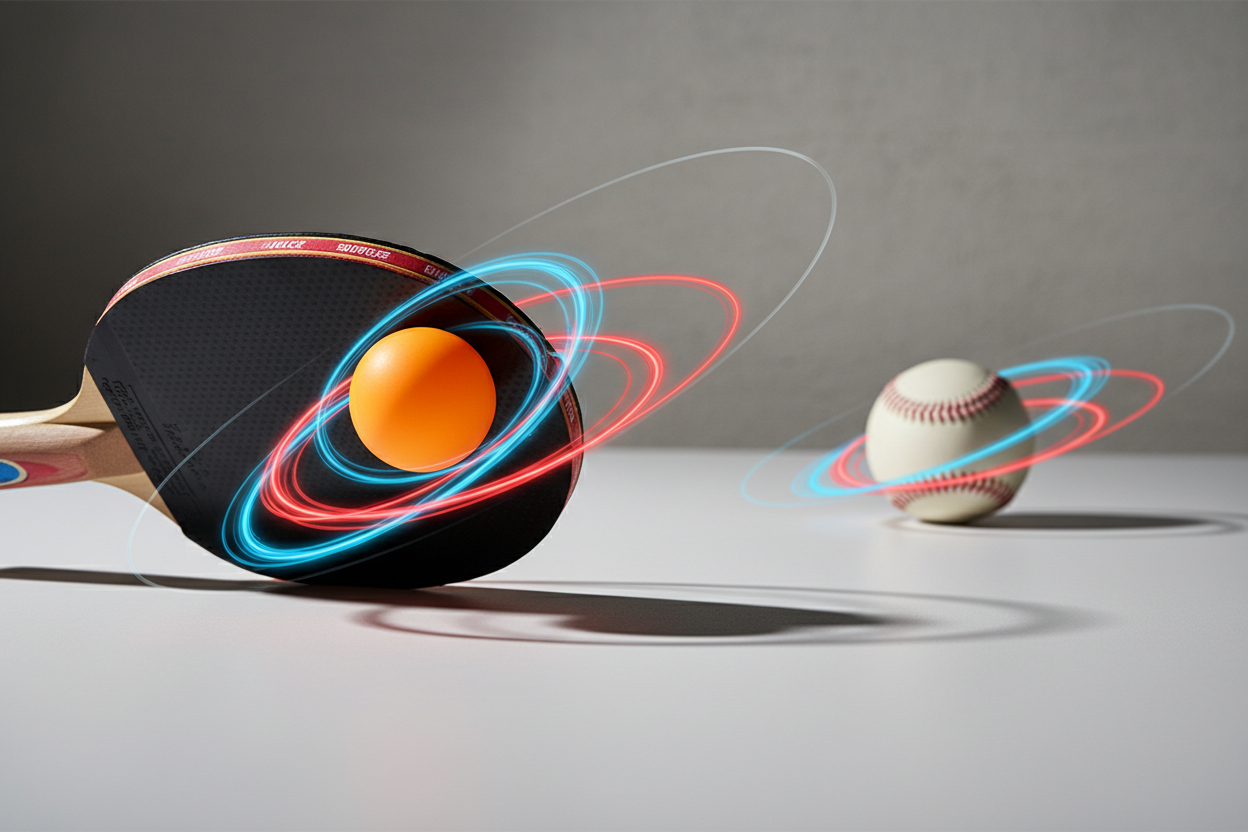
What makes table tennis unique is the sheer variety of spins possible. Unlike other racket sports, the lightweight ball and specialized rubber surfaces allow for extreme spin rates – sometimes exceeding 150 revolutions per second! This creates opportunities for shots that seem to defy gravity and logic.
Mastering Topspin: The Foundation of Aggressive Play 🔥
Topspin is arguably the most important spin technique in modern table tennis. When executed properly, topspin allows you to hit with tremendous speed while maintaining control, as the forward rotation brings the ball down quickly after clearing the net.
To generate effective topspin, focus on brushing up and forward on the ball with a low-to-high paddle motion. Your contact point should be at the peak of the ball’s bounce or slightly on the way down. The key is acceleration through contact – start slowly and explode through the ball. Many players make the mistake of hitting too flat or using only their arm; instead, engage your entire body, rotating your waist and transferring weight from back foot to front foot.
The beauty of topspin lies in its versatility. You can use heavy topspin for powerful attacks, medium topspin for consistent rallies, or light topspin for placement shots. Professional players like Ma Long have built their entire game around topspin variations, demonstrating how this fundamental technique can be endlessly refined and adapted.
Backspin Mastery: The Art of Control and Deception 🎯
While topspin gets most of the glory, backspin is equally crucial for a well-rounded game. Backspin makes the ball float longer in the air and skid low after bouncing, creating difficulties for opponents trying to attack. It’s your defensive shield and offensive setup tool rolled into one.
Creating quality backspin requires a high-to-low paddle motion, brushing underneath the ball. The contact should be crisp and clean, with your paddle slightly open (angled upward). Unlike topspin, backspin shots often require more finesse than power. The goal is to make the ball “bite” the table and stay low, forcing your opponent to lift the ball and potentially set up your next attack.
Advanced players use backspin variations to great effect. Heavy backspin serves can win points outright when opponents misjudge the spin. Light backspin pushes can draw weak returns, while no-spin balls disguised to look like backspin can catch opponents completely off-guard. The legendary Liu Guoliang was famous for his deceptive backspin variations that frustrated even world-class opponents.
Sidespin Secrets: Adding Dimension to Your Game 🌀
Sidespin is where table tennis gets really interesting. By brushing the ball from side to side, you can make it curve dramatically in the air and kick sideways off the table. This three-dimensional element adds layers of complexity that can overwhelm opponents who aren’t prepared for it.
There are two main types of sidespin: right sidespin (clockwise when viewed from above) and left sidespin (counterclockwise). Right sidespin will curve the ball to your left in flight and kick to your right after bouncing on your opponent’s side. Left sidespin does the opposite. The key to effective sidespin is the contact angle – you need to brush across the ball rather than through it.
Sidespin becomes even more powerful when combined with topspin or backspin. These combination spins create shots that curve in multiple dimensions, making them extremely difficult to read and return. Watch players like Dimitrij Ovtcharov or Tomokazu Harimoto, and you’ll see how sidespin combinations can create winning opportunities from seemingly neutral positions.
Advanced Spin Combinations: Taking Your Game to the Next Level 🚀
Once you’ve mastered individual spin types, the real magic happens when you start combining them. Professional players rarely use pure spin – instead, they create complex combinations that maximize deception and effectiveness.
Topspin-sidespin combinations are particularly lethal for attacking shots. By brushing up and across the ball simultaneously, you create shots that dip quickly while curving sideways. This makes it nearly impossible for opponents to judge both the speed and direction correctly. The famous “banana shot” used by players like Timo Boll exemplifies this technique perfectly.
Backspin-sidespin combinations are equally valuable for serves and short game situations. These shots can curve away from your opponent while staying low, creating awkward return angles. The key is varying the ratio of backspin to sidespin – sometimes emphasizing the backspin for control, other times the sidespin for deception.
Don’t forget about the power of no-spin balls mixed into your spin arsenal. A well-timed flat shot among heavy spin shots can catch opponents completely off-guard, as they’re expecting spin that simply isn’t there.
Tactical Applications: When and How to Use Different Spins 🧠
Knowing how to create spin is only half the battle – understanding when and where to use each type separates good players from great ones. Spin selection should be based on the game situation, your opponent’s weaknesses, and your strategic objectives.
Use heavy topspin when you’re in an attacking position and want to finish points quickly. The high speed and downward trajectory make these shots difficult to defend. Medium topspin works well for maintaining pressure in rallies while keeping the ball in play. Light topspin is perfect for placement shots and setting up stronger attacks.
Backspin shines in defensive situations and when you need to slow down the pace. Heavy backspin serves can win points outright or force weak returns. Backspin pushes are excellent for controlling the short game and drawing your opponent forward. Use variation in your backspin – sometimes heavy, sometimes light, occasionally none at all.
Sidespin is your secret weapon for changing the direction of play and creating awkward angles. Use it to move your opponent around the table, open up the court, or simply add an element of unpredictability to your shots. The key is not to overuse sidespin – save it for moments when it will have maximum impact.
Common Spin Mistakes and How to Avoid Them ⚠️
Even experienced players fall into spin-related traps that limit their progress. One of the most common mistakes is trying to create too much spin at the expense of consistency. Remember, a moderate amount of spin that lands on the table is infinitely better than maximum spin that flies off the end.
Another frequent error is telegraphing your spin intentions through obvious body language or paddle preparation. Good opponents will read these tells and adjust accordingly. Work on disguising your spins by maintaining similar preparation motions and varying your contact point and angle at the last moment.
Many players also struggle with spin recognition, leading to poor return choices. Spend time practicing against different spin types, and learn to read your opponent’s paddle angle and stroke direction. The better you become at recognizing incoming spin, the more effectively you can neutralize it or use it to your advantage.
Finally, don’t fall into the trap of becoming too spin-dependent. While spin is crucial, players who rely solely on spin without developing solid fundamentals often hit a ceiling in their improvement. Balance your spin techniques with good footwork, timing, and shot selection.
Practice Drills to Develop Your Spin Game 💪
Developing reliable spin techniques requires focused, deliberate practice. Start with basic spin exercises against a wall or practice partner, focusing on consistency before power. For topspin development, try the classic forehand-to-forehand topspin rally, gradually increasing speed and spin as your control improves.
Backspin practice should include both serves and push shots. Set up targets on the table and work on placing your backspin shots with precision. Practice varying the amount of spin while maintaining accuracy – this will give you more options during matches.
For sidespin development, practice serving with different amounts of sidespin to various locations on the table. Work on both pure sidespin and combination spins, always focusing on consistency first. Multi-ball training is particularly effective for spin development, as it allows for high-volume repetition of specific techniques.
Don’t neglect spin recognition drills. Have a practice partner vary their spins randomly while you focus on reading and returning appropriately. This type of training directly translates to match situations where you need to adapt quickly to different incoming spins.
Conclusion: Spinning Your Way to Success 🏆
Mastering table tennis spin techniques is a journey, not a destination. The concepts we’ve covered – from basic topspin and backspin to advanced combinations and tactical applications – form the foundation of modern competitive play. Remember that spin is most effective when it’s part of a complete game that includes solid fundamentals, smart tactics, and consistent practice.
Start by focusing on one spin type at a time, building consistency before moving to more complex variations. Pay attention to the spin your opponents use, and gradually develop your ability to both create and counter different spin types. Most importantly, be patient with yourself – even professional players spend years perfecting their spin techniques.
The beauty of table tennis lies in its endless depth and complexity. Every spin you master opens up new tactical possibilities and makes the game more enjoyable and rewarding. So grab your paddle, head to the table, and start spinning your way to better table tennis! 🌟
Planet Table Tennis Digital Guides
🎯🏓 For more help in improving your game check out all my digital guides (including free guides) which cover Matchplay, Tactics, Technique, Drills and more.
Click the Learn More button