
How to Handle Pressure in Table Tennis Matches Like a Pro 🏓
Picture this: you’re standing at the table, paddle in hand, with the score tied at 10-10 in the deciding set. Your heart is racing, palms are sweaty, and suddenly that simple forehand loop you’ve practiced thousands of times feels impossible. Sound familiar? Welcome to the world of competitive table tennis, where mental toughness can make or break your game.
Pressure is an inevitable part of table tennis competition, whether you’re playing in your local club tournament or representing your country at the Olympics. The difference between amateur players and professionals isn’t just technical skill – it’s how they handle those crucial pressure moments that determine the outcome of matches.

In this comprehensive guide, we’ll explore proven strategies that professional players use to stay calm, focused, and perform at their peak when the stakes are highest. These techniques have been battle-tested in countless high-pressure situations and can transform your mental game from liability to weapon.
Understanding Pressure in Table Tennis 🧠
Before we dive into solutions, let’s understand what pressure really is in table tennis. Pressure manifests differently for each player – some experience physical symptoms like trembling hands or increased heart rate, while others face mental challenges like overthinking or loss of confidence.
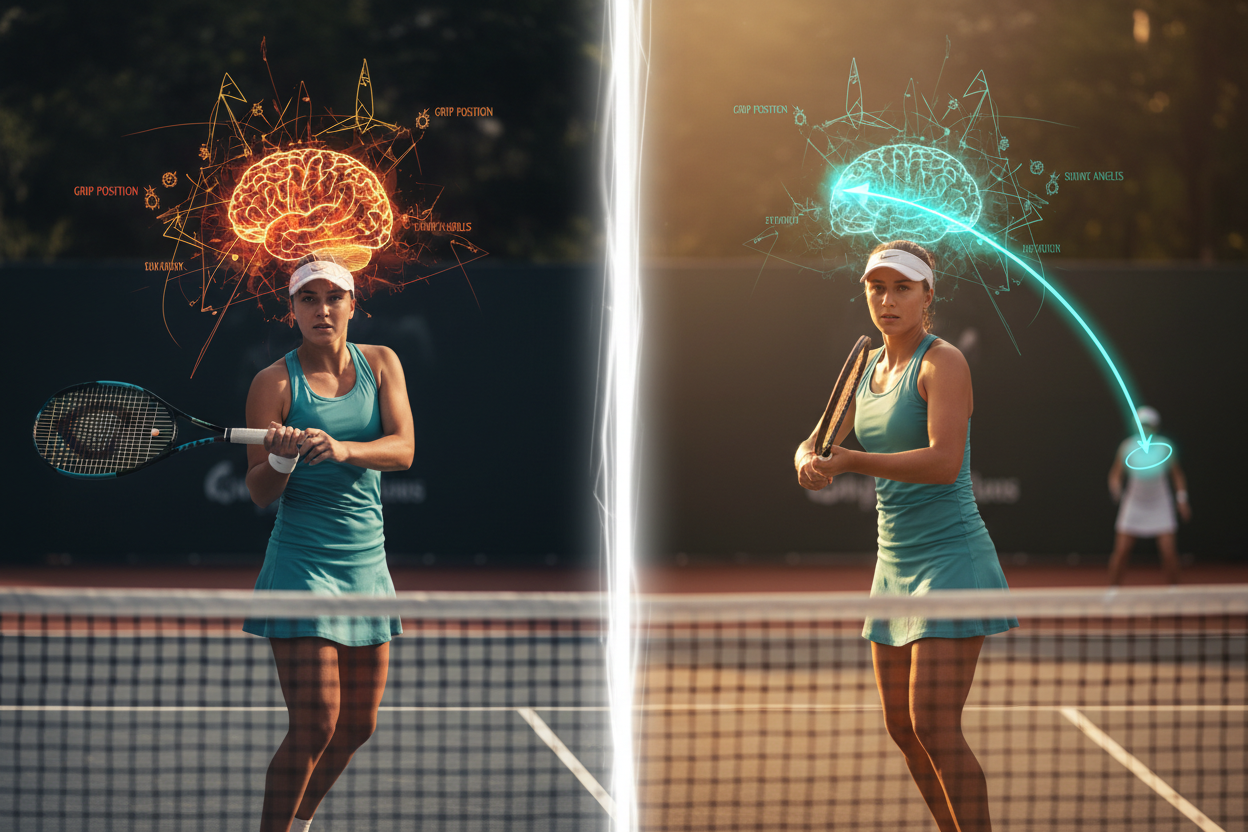
The root of pressure often stems from our fear of failure, expectations from ourselves or others, and the importance we place on specific points or matches. Professional players understand that pressure is actually a privilege – it means you’re in a position where your performance matters.
Research shows that moderate pressure can actually enhance performance by increasing focus and adrenaline. The key is learning to channel this energy productively rather than letting it overwhelm you. Elite players don’t eliminate pressure; they embrace it and use it as fuel for peak performance.
Pre-Match Mental Preparation Strategies 🎯
The foundation of pressure management begins long before you step onto the court. Professional players develop comprehensive pre-match routines that prime their minds for optimal performance under stress.
Visualization is perhaps the most powerful tool in a pro’s mental arsenal. Spend 10-15 minutes before each match mentally rehearsing different scenarios – winning crucial points, coming back from deficits, and handling unexpected situations. The more vividly you can imagine these scenarios, the more prepared your brain will be when they occur in real life.
Goal setting is equally crucial, but it needs to be done correctly. Instead of focusing solely on outcome goals like “I must win this match,” professionals set process goals such as “I will focus on my serve placement” or “I will maintain aggressive footwork throughout the match.” These controllable objectives keep your mind occupied with productive thoughts rather than dwelling on pressure-inducing outcomes.
Physical preparation also plays a vital role in mental readiness. A proper warm-up routine not only prepares your body but also creates a familiar ritual that signals to your brain that it’s time to perform. Many pros have specific warm-up sequences they follow religiously, creating a sense of control and familiarity even in unfamiliar environments.
Breathing Techniques for Instant Calm 💨
When pressure mounts during a match, your breathing is often the first thing to become irregular. Shallow, rapid breathing reduces oxygen flow to your brain and muscles, impairing both decision-making and physical performance.
The 4-7-8 breathing technique is a favorite among professional athletes. Between points, inhale for 4 counts, hold for 7 counts, and exhale for 8 counts. This pattern activates your parasympathetic nervous system, naturally calming your body and mind. The beauty of this technique is that it can be done quickly between points without disrupting the flow of the match.
Diaphragmatic breathing is another powerful tool. Place one hand on your chest and one on your stomach. Focus on breathing so that only the hand on your stomach moves. This type of breathing maximizes oxygen intake and promotes relaxation. Practice this technique during training so it becomes automatic during matches.
Some players find success with rhythmic breathing patterns synchronized with their playing rhythm. For example, exhale during your stroke and inhale during your recovery. This creates a natural flow that can help maintain composure throughout long rallies.
Focus and Concentration Under Pressure 🎪
Maintaining laser-sharp focus when pressure is at its peak separates good players from great ones. Professional players develop what sports psychologists call “attentional control” – the ability to direct their focus where it needs to be, when it needs to be there.
The concept of “playing one point at a time” isn’t just a cliche – it’s a fundamental principle of pressure management. Train yourself to have a short memory for both good and bad points. After each point, take a moment to reset mentally before the next serve. This prevents the emotional baggage of previous points from affecting your current performance.
Develop specific focus cues that work for you. Some players focus on the ball’s seam, others on their opponent’s paddle angle, and some on their own footwork. The key is having predetermined focal points that you can return to when your mind starts to wander or when pressure builds.
External focus generally works better than internal focus under pressure. Instead of thinking about your technique (internal), focus on where you want to place the ball or how you want to affect your opponent’s position (external). This keeps your mind engaged with the tactical aspects of the game rather than getting bogged down in technical overthinking.
Managing Emotions During Critical Moments 😤
Emotional control is perhaps the most challenging aspect of pressure management. Even the most experienced professionals feel frustration, anxiety, or excitement during crucial moments – the difference is how quickly they can regulate these emotions and return to an optimal performance state.
Develop emotional awareness by regularly checking in with yourself during matches. Ask: “How am I feeling right now?” and “Is this emotion helping or hindering my performance?” This simple self-assessment can prevent emotions from spiraling out of control.
Physical gestures can be powerful tools for emotional regulation. Many pros have specific routines they perform between points – adjusting their shirt, bouncing the ball a certain number of times, or taking a few steps away from the table. These actions serve as emotional reset buttons, helping them return to a calm, focused state.
Positive self-talk is crucial, but it needs to be authentic and specific. Instead of generic phrases like “I can do this,” use specific reminders like “Stay low on the backhand” or “Focus on placement, not power.” This type of self-talk keeps your mind engaged with productive thoughts while maintaining confidence.
Physical Techniques to Stay Relaxed 💪
Physical tension is both a cause and effect of mental pressure. When we’re stressed, our muscles tighten, which then sends signals back to our brain that something is wrong, creating a vicious cycle. Professional players use specific physical techniques to break this cycle and maintain optimal muscle tension throughout matches.
Progressive muscle relaxation can be adapted for use during matches. Between games, quickly tense and then relax different muscle groups – your shoulders, arms, and legs. This helps reset your physical state and prevents tension from building up over the course of a long match.
Pay special attention to your grip pressure. Many players unconsciously squeeze their paddle tighter when under pressure, which restricts wrist movement and reduces feel. Regularly check your grip and consciously relax it when you notice it’s become too tight.
Shoulder and neck mobility exercises between games can prevent tension from accumulating in these areas. Simple shoulder rolls and gentle neck stretches can make a significant difference in how relaxed and fluid your movements feel.
Your posture also communicates confidence to both yourself and your opponent. Stand tall, keep your shoulders back, and maintain confident body language even when you’re feeling nervous inside. Research shows that confident posture actually influences your internal emotional state, creating a positive feedback loop.
Learning from Professional Players 🌟
Studying how elite players handle pressure can provide valuable insights for your own game. Watch carefully how professionals behave between points during crucial moments – their body language, routines, and timing often reveal sophisticated pressure management strategies.
Ma Long, widely considered one of the greatest players of all time, is known for his incredibly consistent demeanor regardless of the score. He maintains the same routine and emotional state whether he’s winning 10-0 or losing 0-10. This consistency prevents emotional swings from affecting his decision-making and technique.
Fan Zhendong demonstrates excellent use of time between points, never rushing but also never dawdling. He uses this time efficiently for mental reset and tactical planning. Notice how he often takes a few steps back from the table, composes himself, and then approaches with renewed focus.
Timo Boll’s longevity in professional table tennis can be partially attributed to his exceptional mental game. Watch how he handles adversity – he acknowledges mistakes briefly but immediately shifts his focus to the next point. This rapid emotional recovery prevents negative momentum from building.
Building Mental Resilience Over Time 🏗️
Pressure management isn’t just about techniques you use during matches – it’s about building long-term mental resilience that makes you naturally more comfortable in high-pressure situations.
Deliberately practice under pressure during training. Create artificial pressure situations by playing matches where every point matters, practicing with distractions, or setting specific performance targets. The more you expose yourself to pressure in practice, the more comfortable you’ll become with it in competition.
Develop a growth mindset about pressure situations. Instead of viewing high-pressure moments as threats, reframe them as opportunities to test and improve your mental toughness. Each pressure situation you navigate successfully builds confidence for future challenges.
Keep a match journal where you record not just results, but how you handled pressure moments. Note what worked, what didn’t, and what you learned. This reflection helps you identify patterns and continuously refine your mental approach.
Cross-training with other pressure activities can also help. Many table tennis professionals practice meditation, play other sports, or engage in activities like public speaking that require composure under pressure. These experiences translate into better pressure management on the table tennis court.
Conclusion: Mastering Your Mental Game 🏆
Handling pressure like a professional table tennis player isn’t about eliminating nerves or stress – it’s about developing the skills and mindset to perform optimally despite these feelings. The techniques outlined in this guide have been proven effective by countless professional players who have faced pressure at the highest levels of competition.
Remember that developing mental toughness is a gradual process. Don’t expect to transform your pressure management overnight. Start by implementing one or two techniques that resonate with you, practice them consistently, and gradually add more tools to your mental arsenal.
The beautiful thing about improving your mental game is that the benefits extend far beyond table tennis. The confidence, focus, and emotional regulation skills you develop will serve you well in all areas of life. Every pressure situation you face on the table tennis court is an opportunity to become mentally stronger and more resilient.
Most importantly, embrace pressure as part of what makes competitive table tennis exciting and rewarding. Those heart-pounding moments when everything is on the line are what create the most memorable victories and the most valuable learning experiences. With the right mental tools and consistent practice, you can learn to thrive in these moments just like the professionals do. 🚀
Planet Table Tennis Digital Guides
🎯🏓 For more help in improving your game check out all my digital guides (including free guides) which cover Matchplay, Tactics, Technique, Drills and more.
Click the Learn More button