

Table Tennis Serve and Return Tactics: Dominate from the Start 🏓
Picture this: you’re standing at the table, paddle in hand, ready to serve. Those first few seconds can make or break your entire game. I’ve spent countless hours analyzing what separates recreational players from true table tennis masters, and it always comes down to one thing – how they handle the serve and return. These aren’t just the opening shots of a rally; they’re your secret weapons for psychological warfare and tactical dominance.
Whether you’re a weekend warrior looking to surprise your friends or an aspiring competitor ready to take your game seriously, mastering serve and return tactics will transform you from a passive player into an aggressive strategist. Let me share the insights I’ve gathered from years of playing, coaching, and watching the pros work their magic. 🎯

The Psychology Behind Serve Dominance
Before we dive into the technical stuff, let’s talk about what’s really happening when you serve. You’re not just putting the ball into play – you’re setting the entire tone of the point. Think about it: your opponent has to react to whatever you throw at them, literally and figuratively.
I remember watching a local tournament where this unassuming player kept winning matches against seemingly better opponents. His secret? He served with such variety and confidence that his opponents were constantly guessing, never settling into a rhythm. By the time they figured out one serve, he’d switched to something completely different.
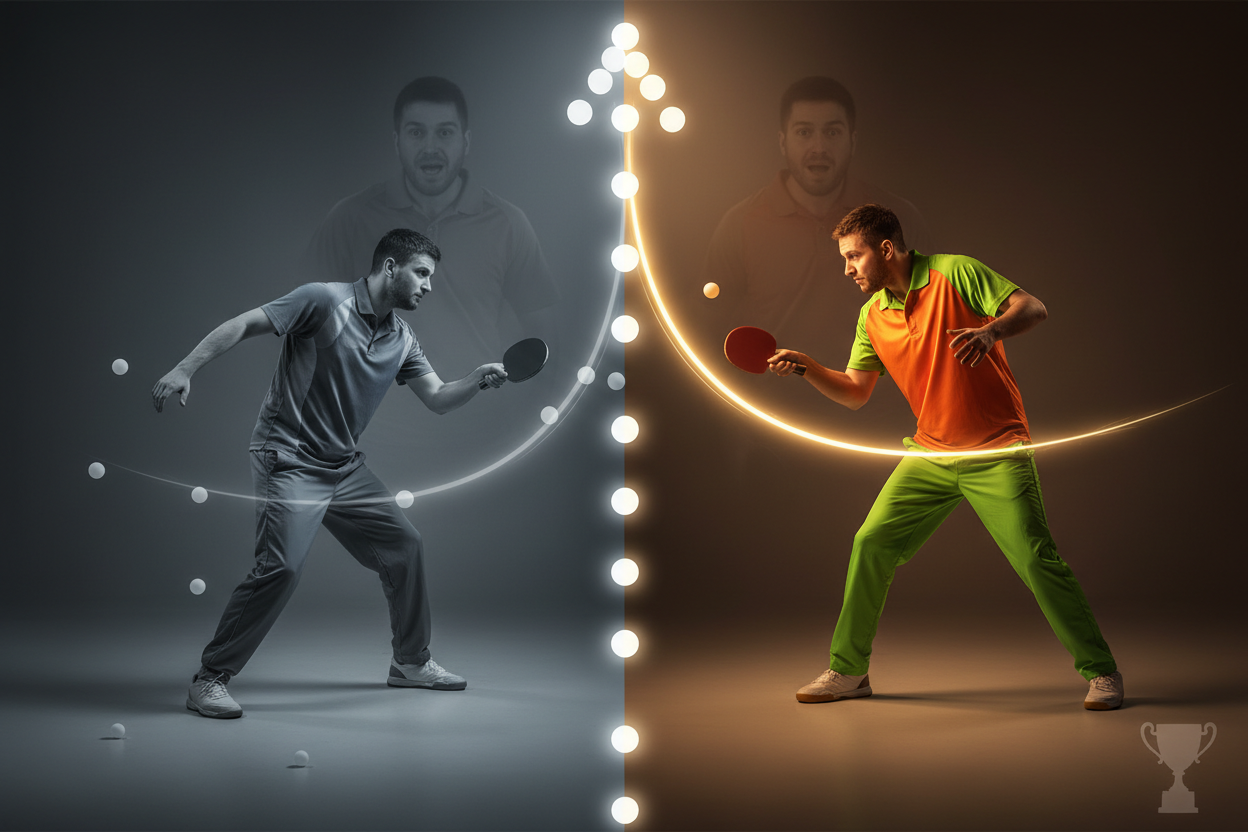
The serve gives you complete control over spin, speed, placement, and timing. Your opponent can only respond to what you’ve created. This psychological advantage is huge – use it wisely, and you’ll have them playing your game from the very first point.
Essential Serving Techniques That Win Points
Let’s get into the meat and potatoes of serving tactics. I’ve broken down the most effective serves that’ll have your opponents scratching their heads and scrambling to keep up.
The Pendulum Serve: Your Bread and Butter
If you’re going to master one serve, make it the pendulum serve. This versatile technique allows you to generate both topspin and sidespin while keeping your opponent guessing about the ball’s trajectory.
Here’s how to execute it: Stand sideways to the table, toss the ball slightly forward and to your right (if you’re right-handed). As the ball descends, swing your paddle in a pendulum motion, brushing the ball with either the forehand or backhand side of your paddle. The key is in the wrist action – a sharp flick at contact creates that wicked spin that’ll have balls jumping off your opponent’s paddle in unexpected directions.
What makes this serve so deadly is its deceptive nature. You can make the exact same motion and produce completely different spins by changing the angle of your paddle at contact. I’ve seen players struggle for entire matches trying to read these serves. 😈
The Ghost Serve: Maximum Spin, Minimum Speed
This is where things get really interesting. The ghost serve is all about creating maximum spin with minimal forward speed. When executed properly, the ball seems to float through the air, then suddenly explodes with spin when it hits your opponent’s paddle.
To master this serve, focus on a long, brushing contact with the ball. Instead of hitting through the ball, you’re essentially caressing it with heavy spin. The ball should barely clear the net and land short on your opponent’s side, forcing them to reach forward awkwardly for the return.
I love using this serve when my opponent is standing too far back from the table. They’re expecting pace, but instead they get this tantalizing slow ball that’s absolutely loaded with spin. The look of confusion is priceless! 😄
Strategic Serve Placement: Where to Put That Ball
Having great spin is worthless if you’re serving to your opponent’s favorite spot every time. Smart placement is what separates good servers from great ones.
Target your opponent’s crossover point – that awkward zone between their forehand and backhand. Most players have a preferred side, and when you force them into that uncomfortable middle ground, they’re more likely to make errors or give you weak returns to attack.
Another killer strategy is serving wide to the forehand, then immediately switching to the backhand corner. This back-and-forth movement breaks down your opponent’s positioning and creates opportunities for winners on the third ball.
Don’t forget about serving short versus long. A well-placed short serve forces your opponent forward, disrupting their stance and timing. Follow it up with a deep serve, and watch them struggle to adjust their position quickly enough.
Reading Your Opponent’s Serves Like a Pro
Now let’s flip the script. When you’re on the receiving end, you need to become a detective. Every serve tells a story – you just need to know how to read it.
Watch the Paddle, Not the Ball
This might sound counterintuitive, but hear me out. The ball’s flight path can be deceiving, especially with heavy spin serves. Instead, focus on your opponent’s paddle angle and contact point. The direction their paddle moves through the ball tells you everything about the spin they’ve imparted.
If their paddle moves from right to left (for a right-handed server), expect sidespin that will curve the ball to your left. If they brush upward on the ball, prepare for topspin that will kick forward after bouncing. This technique has saved me from countless surprise spins over the years.
Aggressive Return Strategies That Flip the Script
Here’s where most recreational players go wrong – they treat the return as a defensive shot. Wrong! The return is your chance to immediately seize control of the point and put your opponent on the defensive.
Against short serves, step into the table and attack with a quick flip or push. Don’t just get the ball back – make a statement. I like to target the server’s backhand corner with a fast, low return. They’re expecting a passive return, but instead they get a weapon coming back at them.
For long serves, this is your moment to shine. A well-timed loop or drive can completely neutralize your opponent’s serve advantage and immediately put you in control of the rally. The key is early timing – catch the ball at the peak of its bounce for maximum power and control.
The Third Ball Attack: Capitalizing on Weak Returns
This is where serving strategy really pays off. Your serve should be designed to elicit a specific type of return that you can attack with your third ball. It’s like setting up a chess move three moves ahead.
If you serve short with heavy backspin, your opponent will likely push the ball back long and high – perfect for a devastating loop attack. If you serve long and fast to their backhand, expect a weak block that you can smash with authority.
I spend a lot of time practicing specific serve-and-attack combinations. Having these patterns ingrained in muscle memory means I can execute them under pressure without thinking. It’s like having a secret playbook that my opponents can’t read. 🎯
Advanced Tactics: Mixing It Up Like a Master
Once you’ve mastered the basics, it’s time to add some serious variety to your game. The best servers are unpredictable – they keep their opponents constantly guessing and never let them settle into a comfortable rhythm.
Try serving the same spin to different locations, or the same location with different spins. Vary your serving pace and rhythm. Sometimes serve immediately after the previous point ends, other times take your full time allowance. These psychological games can be just as effective as technical perfection.
One of my favorite advanced tactics is the “dummy serve” – making the motion for heavy spin but actually serving with minimal rotation. After hitting several heavy spin serves, throw in this change-up and watch your opponent over-compensate for spin that isn’t there. It’s absolutely devastating when timed correctly! 😎
Practice Drills That Actually Work
All this theory means nothing without proper practice. Here are the drills that have helped me and my students develop killer serve and return games.
For serving, set up targets on the table using cones or towels. Practice hitting these targets with different spins and speeds. Start close and gradually increase the difficulty. I recommend spending at least 15 minutes of every practice session just on serving – it’s that important.
For returns, have a practice partner serve various spins while you focus on reading and returning aggressively. Start with one type of serve until you can handle it consistently, then mix in different spins and placements.
The key is quality over quantity. Better to practice 50 perfect serves than 200 sloppy ones. Focus on consistency first, then add power and spin as your technique improves.
Conclusion: Your Path to Serve and Return Mastery
Mastering table tennis serve and return tactics isn’t just about learning new techniques – it’s about developing a strategic mindset that puts you in control from the very first ball. The serve gives you the power to dictate play, while smart return tactics can immediately flip the script on your opponent.
Remember, every great player started exactly where you are now. The difference between good and great isn’t natural talent – it’s the willingness to practice these fundamentals until they become second nature. Start with the pendulum serve and basic return positioning, then gradually add complexity as your skills develop.
The beautiful thing about table tennis is that small improvements in serve and return can lead to dramatic improvements in your overall game. Your opponents will notice the difference immediately, and you’ll find yourself winning points that used to slip away. So grab your paddle, find a practice partner, and start dominating from the very first serve! 🏆
Trust me, once you experience the satisfaction of winning a point with a perfectly executed serve or crushing return, you’ll be hooked on the tactical side of this amazing sport. The table is waiting – time to make your move! 🚀
Planet Table Tennis Digital Guides
🎯🏓 For more help in improving your game check out all my digital guides (including free guides) which cover Matchplay, Tactics, Technique, Drills and more.
Click the Learn More button