

10 Common Table Tennis Mistakes That Are Killing Your Game 🏓
We’ve all been there – standing at the table tennis table, paddle in hand, wondering why our shots keep sailing into the net or flying off the table entirely. After coaching hundreds of players and making countless mistakes myself over the years, I’ve noticed the same patterns emerging again and again. The truth is, most recreational players are unknowingly sabotaging their own progress with fundamental errors that are surprisingly easy to fix.
Whether you’re a weekend warrior looking to dominate your office tournament or an aspiring competitor ready to take your game to the next level, identifying and correcting these common mistakes can transform your playing experience overnight. Let’s dive into the ten most game-killing errors I see players make – and more importantly, how to fix them! 💪
1. Gripping Your Paddle Like a Baseball Bat ⚾
The foundation of good table tennis starts with your grip, yet it’s where most beginners go wrong. I can’t count how many times I’ve seen players clutch their paddle like they’re about to swing for the fences at Yankee Stadium. This death grip not only limits your wrist flexibility but also reduces your ability to generate spin and control the ball’s placement.
The correct grip should feel relaxed and natural. For the shakehand grip (most common), imagine you’re gently shaking hands with the paddle handle. Your thumb should rest on one side of the rubber, your index finger on the other, with the remaining three fingers wrapped loosely around the handle. The key word here is “loosely” – you should be able to wiggle your fingers slightly even while holding the paddle.
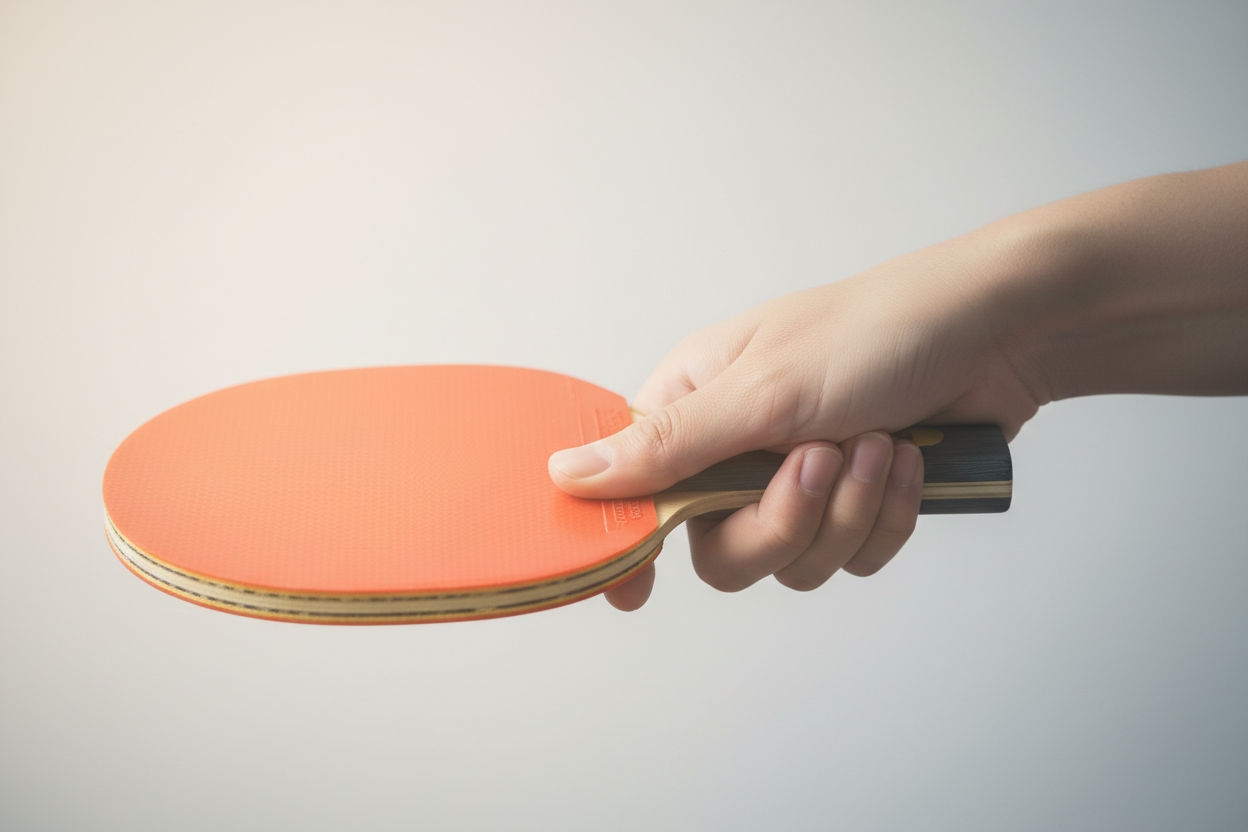
Practice this grip during warm-up sessions, and you’ll notice an immediate improvement in your touch and ball control. Remember, power comes from technique and timing, not from squeezing the life out of your paddle! 🎯
2. Standing Like a Statue During Play 🗿
Table tennis is a dynamic sport that requires constant movement, yet many players plant themselves in one spot like they’ve grown roots. This static positioning severely limits your ability to reach balls effectively and puts you at a massive disadvantage against opponents who understand the importance of footwork.
Proper table tennis stance involves staying on the balls of your feet, knees slightly bent, and maintaining a ready position that allows you to move quickly in any direction. Your feet should be shoulder-width apart, with your non-dominant foot slightly forward. Think of yourself as a coiled spring, ready to explode into action at any moment.
Between shots, always return to this ready position. Professional players are constantly moving, adjusting their position even during seemingly simple rallies. Start incorporating small shuffling steps and practice moving to different positions around the table during your training sessions.
3. Swinging for the Fences on Every Shot 💥
Here’s a hard truth: table tennis isn’t about hitting the ball as hard as humanly possible. I’ve watched countless players lose matches because they tried to end every rally with a devastating smash, only to send ball after ball sailing over the table or crashing into the net.
Consistency beats power every single time in table tennis. Focus on developing controlled, accurate shots before worrying about adding pace. A well-placed shot at 70% power is infinitely more valuable than a wild swing at 100% that has a 50% chance of going in.
Start each practice session with controlled rallies, focusing on keeping the ball in play for extended periods. Gradually increase the pace as your consistency improves. You’ll be amazed how many points you can win simply by keeping the ball on the table while your opponent makes unforced errors trying to hit winners.
4. Ignoring the Magic of Spin 🌪️
Spin is the secret sauce that separates good table tennis players from great ones, yet many recreational players treat it as an afterthought. They focus solely on hitting the ball hard and straight, missing out on one of the most powerful weapons in the table tennis arsenal.
There are three main types of spin to master: topspin (forward rotation), backspin (backward rotation), and sidespin (lateral rotation). Each type affects the ball’s trajectory and bounce differently, allowing you to create angles and shots that would be impossible with flat hits alone.
Topspin helps your shots dip down quickly, allowing you to hit harder while keeping the ball on the table. Backspin makes the ball float and bounce lower, perfect for defensive shots and setting up attacks. Sidespin can curve the ball’s path and create tricky bounces that throw off your opponent’s timing.
Dedicate practice time specifically to spin development. Start with basic topspin and backspin shots, focusing on the brushing motion against the ball rather than hitting through it. Your game will reach new heights once you master these fundamental spins! ✨
5. Serving the Same Boring Serve Every Time 😴
Your serve is the only shot in table tennis where you have complete control, yet many players waste this golden opportunity by serving the same predictable ball every single time. It’s like giving your opponent a roadmap to your strategy before the point even begins!
Developing a variety of serves is crucial for keeping your opponents guessing and gaining early advantages in points. Mix up your serves with different spins, speeds, and placements. A good serving repertoire should include short backspin serves, long fast serves, sidespin serves, and the occasional no-spin serve to throw off timing.
Practice serving to different areas of the table – short to the forehand, long to the backhand, down the middle to jam your opponent. The more variety you have, the more options you’ll have for setting up winning shots or forcing weak returns that you can attack.
6. Playing Every Ball from the Same Distance 📏
Table positioning is an art form that many players never fully grasp. Standing too close makes it difficult to handle fast shots and limits your swing, while standing too far back gives you less time to react and reduces your attacking opportunities.
The optimal distance from the table varies depending on your playing style and the situation. For most shots, you should be close enough to play the ball at its peak height, typically 1-3 feet from the table edge. Against heavy topspin, you might need to step back slightly to let the ball drop. For attacking short balls, you’ll need to move in closer.
Practice adjusting your distance based on different types of incoming balls. Pay attention to how the ball’s trajectory changes your optimal positioning, and always be ready to move forward or backward as needed during rallies.
7. Watching the Paddle Instead of the Ball 👀
This might sound obvious, but you’d be surprised how many players lose focus on the ball during crucial moments. Some watch their opponent’s paddle, others get distracted by the score, and some simply lose concentration during long rallies.
Maintaining laser focus on the ball from the moment it leaves your opponent’s paddle until it touches your own is absolutely critical. The ball contains all the information you need – its spin, speed, and trajectory tell you exactly how to respond.
Train your eyes to track the ball’s entire flight path. Watch how it bounces on your side of the table, noting any unusual behavior that might indicate spin. This visual information is what allows advanced players to make split-second adjustments and execute perfect shots under pressure.
8. Neglecting Your Backhand Like It’s Contagious 🦠
The backhand phobia is real, and it’s costing players matches every day. Many recreational players develop a decent forehand but completely neglect their backhand, leading to awkward positioning and missed opportunities during matches.
While the backhand can feel less natural initially, it’s actually a more compact and potentially more consistent shot than the forehand. The shorter swing path means less can go wrong, and once you develop proper technique, backhand shots can be incredibly reliable.
Dedicate equal practice time to both sides of your game. Start with simple backhand drives and gradually work up to more advanced shots like backhand loops and flicks. Your opponents won’t be able to exploit your weak side if you don’t have one! 🛡️
9. Forgetting That Your Brain Is Your Best Weapon 🧠
Table tennis is often called “chess at light speed,” and for good reason. Many players get so caught up in the physical aspects of the game that they forget about strategy and mental preparation. They play reactively instead of proactively, missing opportunities to control the flow of matches.
Start thinking several shots ahead. If you serve short to your opponent’s backhand, anticipate a push return and prepare to attack with a forehand loop. If your opponent consistently attacks your middle, adjust your positioning to cover that area better.
Mental preparation is equally important. Develop routines between points to stay focused and calm. Visualize successful shots before executing them. Learn to read your opponent’s patterns and tendencies, then exploit them strategically throughout the match.
10. Skipping the Warm-Up Like It’s Optional 🏃♂️
The number of players who jump straight into competitive play without a proper warm-up is staggering. Your body needs time to adjust to the specific movements and timing required for table tennis, and your brain needs time to tune into the ball’s behavior.
A good warm-up should include gentle stretching, basic stroke practice, and gradually increasing intensity. Start with simple drives, move to more complex shots, and finish with some practice serves. This progression prepares both your body and mind for optimal performance.
Don’t rush this process! Even professional players spend 15-20 minutes warming up before matches. Your warm-up time is an investment in better play, fewer injuries, and more enjoyable matches.
Transform Your Game Starting Today! 🚀
The beautiful thing about these common mistakes is that they’re all fixable with awareness and practice. You don’t need years of training or expensive equipment – just a willingness to step back, evaluate your current habits, and make deliberate improvements.
Pick one or two mistakes from this list that resonate most with your current game and focus on correcting them over the next few weeks. Once those improvements become natural, move on to the next areas that need attention. Remember, table tennis is a journey of continuous improvement, and every small adjustment brings you closer to the player you want to become.
The next time you step up to the table, you’ll have the knowledge and awareness to avoid these game-killing mistakes. Your opponents won’t know what hit them! Keep practicing, stay patient with yourself, and most importantly, have fun with this incredible sport. After all, the best players are those who never stop learning and growing their game. 🏆
Planet Table Tennis Digital Guides
🎯🏓 For more help in improving your game check out all my digital guides (including free guides) which cover Matchplay, Tactics, Technique, Drills and more.
Click the Learn More button